Before sampling rigid box inserts, send the complete product configuration, dimensions and weight, permitted contact areas, preferred arrangement and removal method. Agree what the sample will demonstrate before approving the insert material or cut-outs.
A photograph can show the presentation you want. It cannot establish whether an insert will hold a filled bottle securely, avoid a decorated surface or let a customer lift the product out comfortably. A useful brief for rigid box inserts connects those decisions to the actual items being packed.
Contents
1. Send the product as it will be packed
Provide representative physical products where practical, together with dimensioned drawings or clearly labeled measurements. Include caps, pumps, handles, sleeves, accessories and protective wrapping that will be present in the finished pack. Identify whether the product is filled or empty when its weight is recorded.
For rigid box inserts holding a gift set, list every component and the quantity of each. Number the items consistently in your photographs, measurements and proposed layout. If several product variants will share one insert, identify their differences before a single sample becomes the reference for the whole range.
For example, a fragrance set might contain a capped bottle and a separate travel spray. A brief showing only the bottle body leaves the cap clearance and the second compartment unresolved. This is a planning example, not a MEIKEI customer case.
2. Mark where the insert may touch the product
Annotate a product photograph with areas that may be supported and areas that need review. Identify delicate decorations, labels, moving parts and surfaces where visible marking would be unacceptable. Avoid asking for the “tightest possible fit” without describing how the product will be packed and removed.
| Requirement | What to tell the supplier | What to check on the sample |
|---|---|---|
| Product position | Orientation, visible face and relationship to other items. | Items sit at the intended height and present the correct face. |
| Contact | Permitted support areas and surfaces that need protection. | Contact occurs where intended; inspect the product after removal. |
| Retention | Expected packing, opening and handling sequence. | Record movement or displacement against agreed limits. |
| Access | Where the user should grip, lift or pull. | Products can be removed as intended without forcing adjacent parts. |
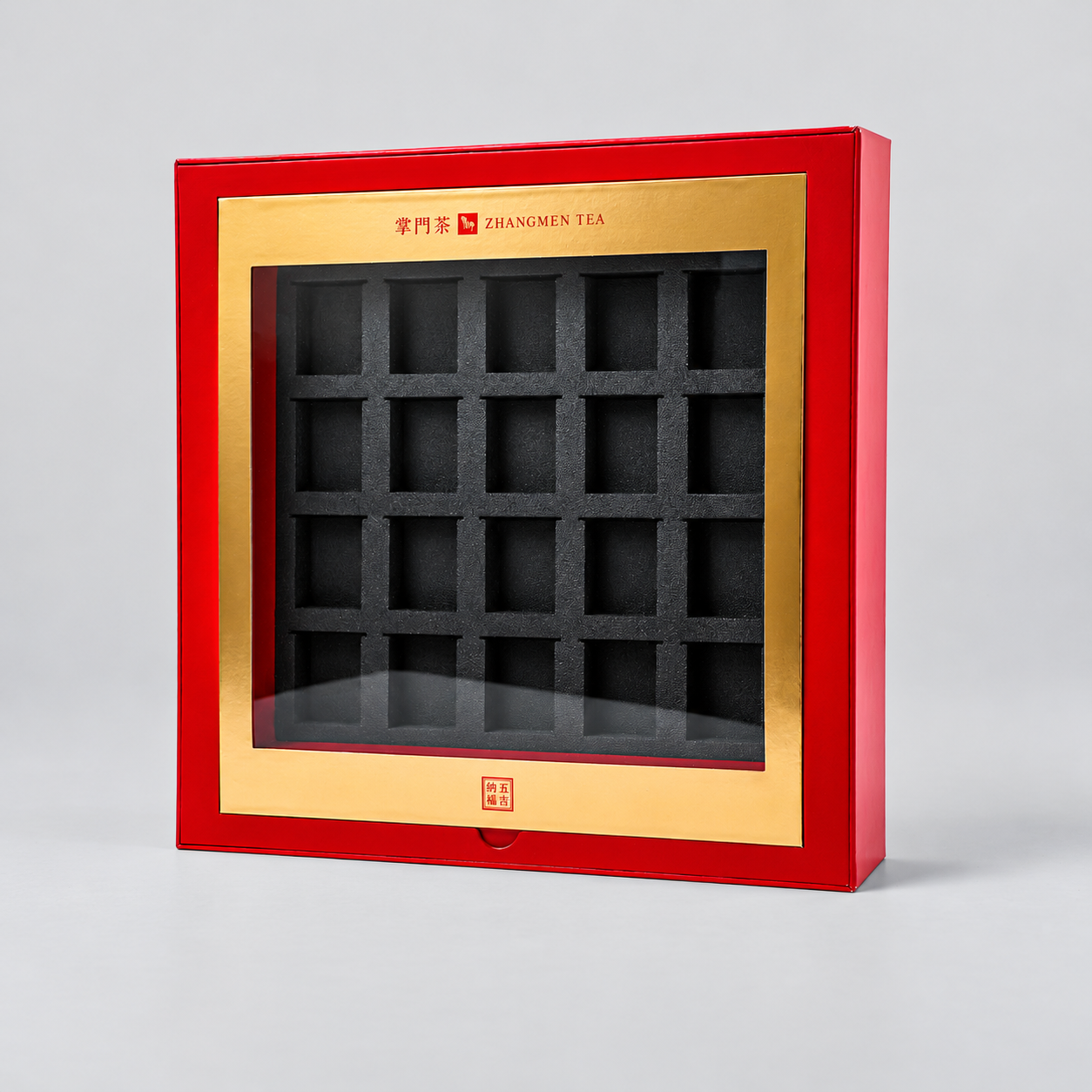
For custom rigid box inserts, ask the structural reviewer to propose cavity dimensions and allowances for the selected construction. Product dimensions, insert openings and box inside dimensions are separate records. Any manufacturing tolerances should be agreed explicitly rather than inferred from a photograph.
3. Match rigid box inserts to the opening style
Describe the order in which the customer should see and remove the items. A lift-off lid, hinged lid and sliding drawer offer different access. Show the intended box orientation during opening, and note whether a ribbon, finger recess or removable tray needs to be considered.
MEIKEI’s custom rigid box options include paperboard, covered board, foam and molded-fiber insert directions for project review. Availability and the final specification need confirmation for the individual product. The material name alone does not approve the fit or protection.
When comparing rigid box inserts, ask each supplier to describe the complete construction: material specification, construction, surface covering, how it is held in the box, and how the packer loads it. If environmental claims are part of the brief, request evidence for the actual construction and intended market rather than assuming that one material name settles the question.
4. Review packing, opening and removal on the same sample
When reviewing rigid box inserts, keep the product revision and sample reference together. Ask which features of the sample represent production and which are provisional. A plain fit sample may leave the final surface covering or decoration unconfirmed.
- Pack the full set. Follow the proposed loading order, including accessories and any protective wrapping.
- Close the box. Check the intended closure with every item in place and identify unwanted contact with the lid or neighboring components.
- Open and remove. Follow the planned customer sequence. Record any difficult grip, snagging or disturbance of other items.
- Inspect contact areas. Check the product and insert for marks, deformation or other changes against agreed acceptance criteria.
- Record the decision. List required revisions, the next sample reference and the person responsible for approval.
These are procurement review steps, not a standardized performance test. Use the sample approval checklist to record fit, appearance and unresolved checks separately.
5. Keep transit protection as a separate approval
A fitted presentation insert does not, by itself, establish shipping performance. Explain whether the rigid box travels inside an outer carton, how the products are distributed and which components make up the complete shipping pack.
ISTA’s design and testing guidance connects test selection to the distribution environment and calls for representative products and packages. Discuss the appropriate evaluation with a qualified testing provider; a tabletop fit review cannot replace that work.
If the insert, product or packing process changes after approval, review the effect on performance. ISTA’s retesting guidance addresses changes that could affect the packaged product and recommends retesting when the effect is uncertain.
Prepare your brief for rigid box inserts
Include the item list, dimensions and weights, annotated product photographs, preferred layout, permitted contact areas, loading and removal sequence, box opening style, quantities by version and delivery destination. Add the required delivery date for feasibility review, and identify any unanswered questions.
Send MEIKEI your product details and insert brief to discuss a sample specification. If you are still choosing the outer structure, start with the folding carton, rigid box and mailer comparison. Confirm material, fit, sample scope and commercial terms for your project before production.