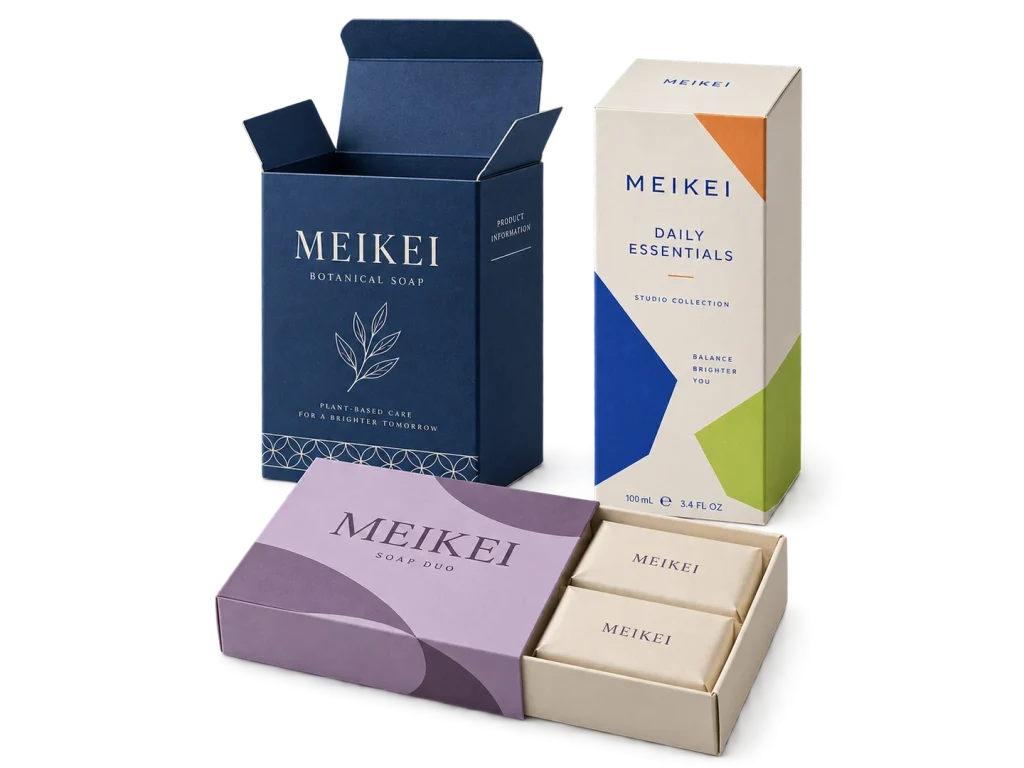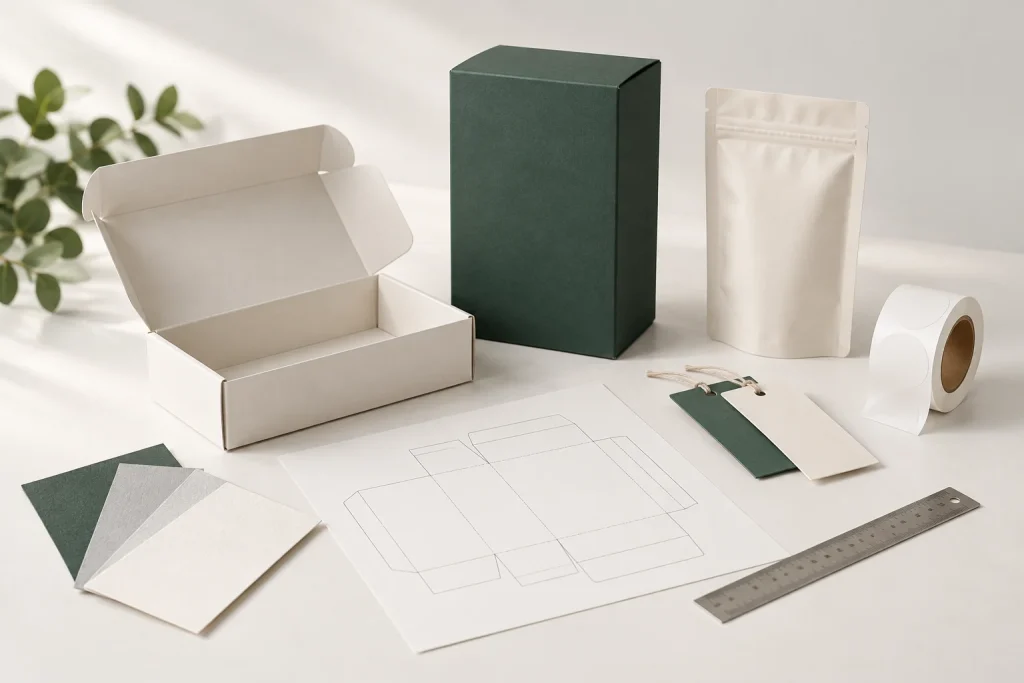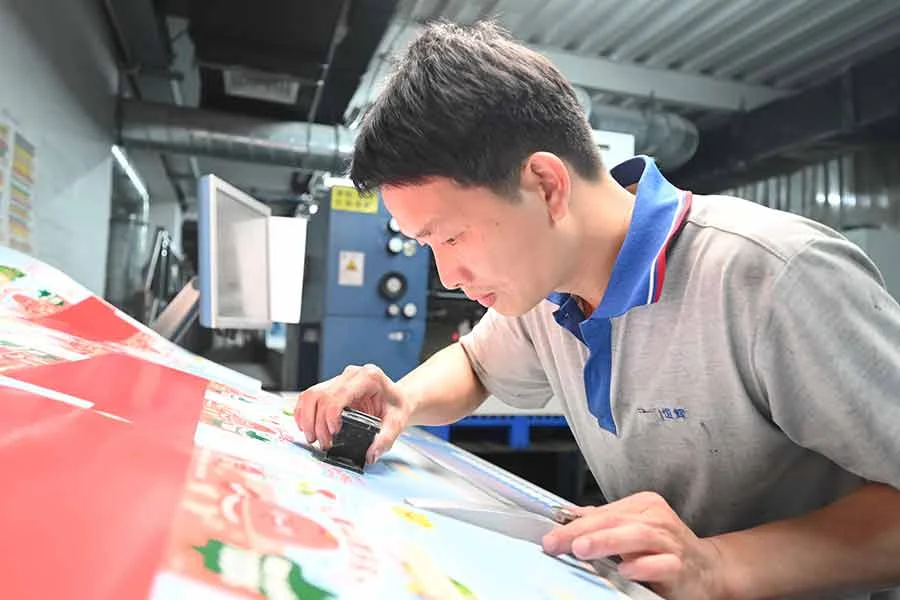
Approve a packaging sample against a written brief—not a general impression. Check product fit, assembly, material, print, finishing and packing, and record which sample represents each requirement. A plain structural sample, digital mockup and production-equivalent printed sample answer different questions.
The goal is to remove ambiguity before the order proceeds. That does not mean every project needs every kind of sample. It means everyone understands what has been confirmed and what still requires evidence.
First, identify the sample type
| Reference | Useful for reviewing | Do not automatically infer |
|---|---|---|
| Digital mockup | Visual direction and panel orientation | Actual fit, color or protection |
| Plain structural sample | Size, opening, assembly and product access | Final print or surface finish |
| Printed sample or proof | The print/finish attributes it was made to represent | That all materials and processes match production |
| Packed-product test sample | Performance under the agreed test conditions | Performance for a different product, route or construction |
Ask the supplier to state differences between the sample and planned production: board, printing method, finishing, cutting or assembly. Record those differences beside the approval. Otherwise a convenient sample can become a misleading production standard.
Check fit with the actual product
Insert the real product, including its cap, pump, protective wrapping or accessories. Open and close the package several times. Check that a customer can remove the contents without struggling and that an operator can pack them consistently.
For a label, apply it to the actual container. For a pouch, trial the intended fill. For a booklet, turn through the pages and check the reading order. Choose checks around the product rather than copying a box checklist into every packaging category.
Check the approved artwork and finish
- Match the sample to the correct SKU and artwork revision.
- Read all panels, including hidden flaps and inside printing.
- Compare agreed colors against the chosen reference under consistent lighting.
- Check alignment, cut edges, folds, foil and selective coating positions.
- Review barcodes or variable data using the verification process appropriate to the job.
Keep the artwork approval checklist beside the sample review. A production team should not have to choose between an approved sample with old copy and a new PDF with an unspecified structural change.
Define performance separately from appearance
Write down what normal use involves: handling, storage, application, filling and delivery. Then agree the evaluations needed for that use. For shipping packaging, discuss a suitable packaged-product test with a qualified provider instead of treating a hand drop as certification.
Changes matter after approval too. ISTA’s retesting guidance calls for repeating tests when changes to the product, packaging or process could affect performance. Changes unrelated to performance may be exempt; when the effect is uncertain, the guidance calls for retesting. Keep the tested specification traceable to the order.
Use a clear approval record
| Record | What to write |
|---|---|
| Sample identity | Project, SKU, supplier reference and date |
| Specification | Dimensions, material, print and finishing revision |
| Acceptance criteria | Agreed dimensions and tolerances, appearance or performance criteria, and the applicable evaluation method |
| Decision | Approved, approved with listed conditions, or revise and resubmit |
| Exceptions | What the sample does not represent and how it will be verified |
| Responsibility | Approver, open actions and confirmation before production |
If approval is conditional, identify who confirms the condition is met. “Approved except color” is not useful unless the color reference and next approval step are documented. Keep photographs, but retain a physical control sample when appearance or feel is important.
Connect approval to packing and repeat orders
Review how finished packaging will be bundled, separated, identified and protected for delivery. A good printed surface can be marked by unsuitable packing. Agree carton labels and SKU separation so incoming checks can identify the right items without opening every bundle.
For repeat orders, confirm whether the product, artwork, quantity or material availability has changed. Do not reuse an old approval automatically. If you are still deciding on the structure, use our box format comparison before sampling.
Explore MEIKEI’s project support services and end-to-end packaging coordination to discuss the required approval stages. The quote checklist helps make sample work, testing and other deliverables explicit before costs are agreed.
Download the sample approval record
Keep the sample reference, observations, required changes and final approval together in this blank worksheet.
Download the blank CSV worksheet · Browse all buyer resources
Published by MEIKEI Printing as general packaging planning guidance. Material suitability, product performance and production details must be confirmed for your actual specification. Linked technical references support the relevant points; illustrations are not test evidence.