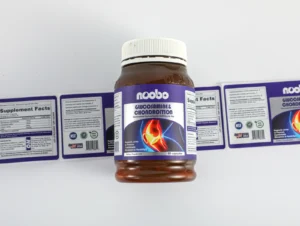
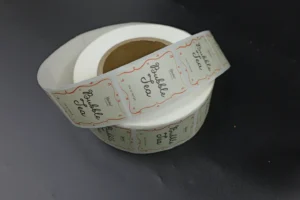
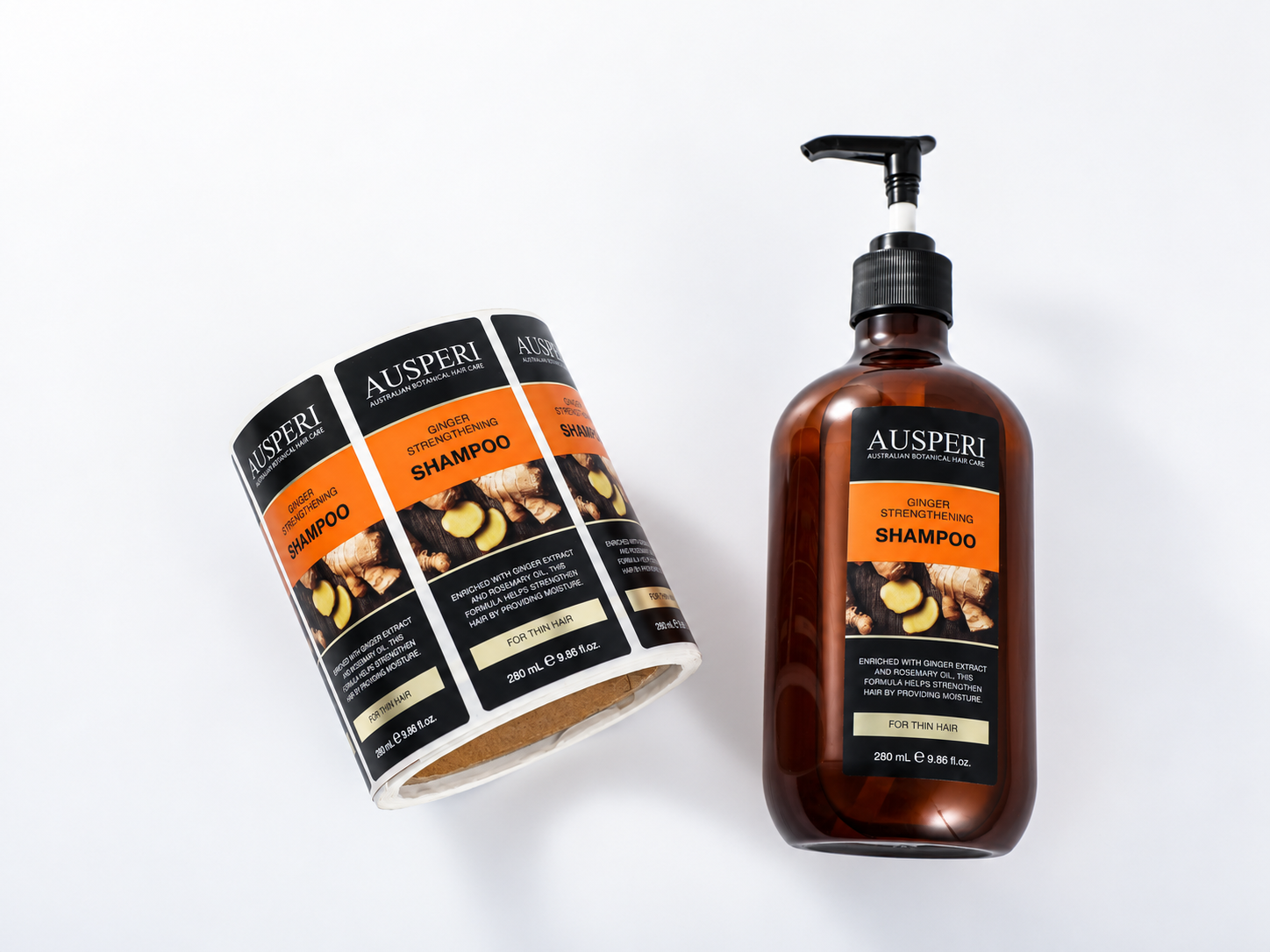
Labels for squeezable bottles need to be reviewed while the container moves, not only while it stands on a shelf. Start with the actual bottle and intended use, then compare the film, adhesive and printed finish as one label construction. A material that looks suitable on an empty display sample still needs a trial on the intended pack.
MEIKEI primarily uses Avery Dennison label materials. The five checks below help you prepare a clearer request for material selection and sampling, whether you are developing a personal-care bottle or another flexible container.
Contents
1. Describe how the bottle changes shape
Send the container material or resin specification, dimensions, fill volume and a physical bottle sample. Add photographs of the label area and a short description of how the pack is held and dispensed. If squeezing is part of use, show where the walls move and whether the bottle returns to its original shape.
Do not use a pump, cap style or product category alone to define the requirement. Tell the supplier whether the label must accommodate light handling, deliberate squeezing or a more complex shape change. Include any changes during filling and the condition of the pack when labeling takes place.
Mark the intended label boundary on the sample. A small front panel and a large wraparound design are different briefs, even on the same bottle.
2. Compare film conformability before choosing a grade
For labels for squeezable bottles, ask how the proposed film accommodates the bottle’s movement. Avery Dennison’s Asia Pacific conformable-film portfolio includes semi-conformable MDO films and fully conformable polyethylene films. Conformability is one selection factor alongside printing and dispensing needs.
The manufacturer’s October 2025 North America Squeezable Films Technical Guide provides examples to discuss:
| Example | Positioning in the cited guide | Buyer’s follow-up |
|---|---|---|
| Global MDO Next Generation | A semi-squeeze film option. | Does the proposed construction accommodate this bottle’s movement and label coverage? |
| High Performance Primax / FasClear | Fully conformable options. | Which grade, appearance and adhesive combination should be sampled? |
| 3 Mil MDO | A full-squeeze option for larger, complex label designs and irregular surfaces. | How will the printed label behave through filling, application and use? |
These are regional manufacturer examples, not a MEIKEI stock list. Request the current, complete material reference available for your order. A family name alone does not specify the adhesive, liner or finish.
Use the broader BOPP vs paper label guide for an initial material comparison, then bring the bottle movement into this more specific review.
3. Match the adhesive and finish to the actual pack
A flexible face film does not answer every application question. Avery’s squeezable-film guide emphasizes selecting the face material and adhesive together. Give the supplier the bottle’s surface specification, any coating or preparation, the labeling method and the conditions during application and use.
For labels for squeezable bottles, record the full proposed construction: face film, adhesive reference, liner, printing and protective finish. Ask which parts of the sample match planned production and which are provisional.
State whether the container will encounter wet handling or product spills, and what printed information must remain readable. For transparent designs, use the clear-label and white-ink guide to specify appearance separately. A clear film name alone does not settle opacity or ink coverage.
4. Review samples through the intended use sequence
Agree a sample review plan with the supplier before approving labels for squeezable bottles. Use the actual bottle, proposed label dimensions and representative printed construction. Identify the filling state and application conditions used for the review.
- Before movement: photograph placement, edges and the printed surface after the agreed conditioning period.
- During use: reproduce the intended handling or squeezing method and relevant exposure, as agreed with the supplier.
- After release: inspect for wrinkles, lifted edges, separation or visible changes to printing. Record when each observation appears.
- For a revision: identify what changed in the bottle, label size or construction before comparing results.
Agree the number of cycles, inspection times and acceptance criteria for your project. This purchasing checklist is not a standardized test method and does not establish a universal squeeze rating. Keep the approval record separate from artwork approval using the packaging sample approval checklist.
5. Prepare a brief for labels for squeezable bottles
Send a compact brief with these fields:
- Bottle material, dimensions, fill volume and physical sample availability.
- Label dimensions, coverage area, artwork versions and quantity per version.
- How the bottle is filled, labeled, handled and dispensed.
- Expected temperature, moisture and product-contact conditions.
- Preferred appearance, print and finish, plus any reference material.
- Sample review requirements, delivery destination and requested delivery date.
For machine application, include the applicator requirements when reviewing custom roll labels.
Planning labels for squeezable bottles? Send MEIKEI your bottle details and artwork to discuss a suitable material and sampling proposal. We can use your actual pack requirements to guide an Avery Dennison material discussion, then confirm the available construction and project terms before ordering.
Sources and references
- Avery Dennison, Conformable Film, Asia Pacific portfolio page, accessed October 18, 2026. Supports the distinction between semi-conformable MDO and fully conformable polyethylene options.
- Avery Dennison, Squeezable Films Technical Guide, North America, October 2025, pages 2–3. Supports the named film-family examples and the need to select face material and adhesive together.