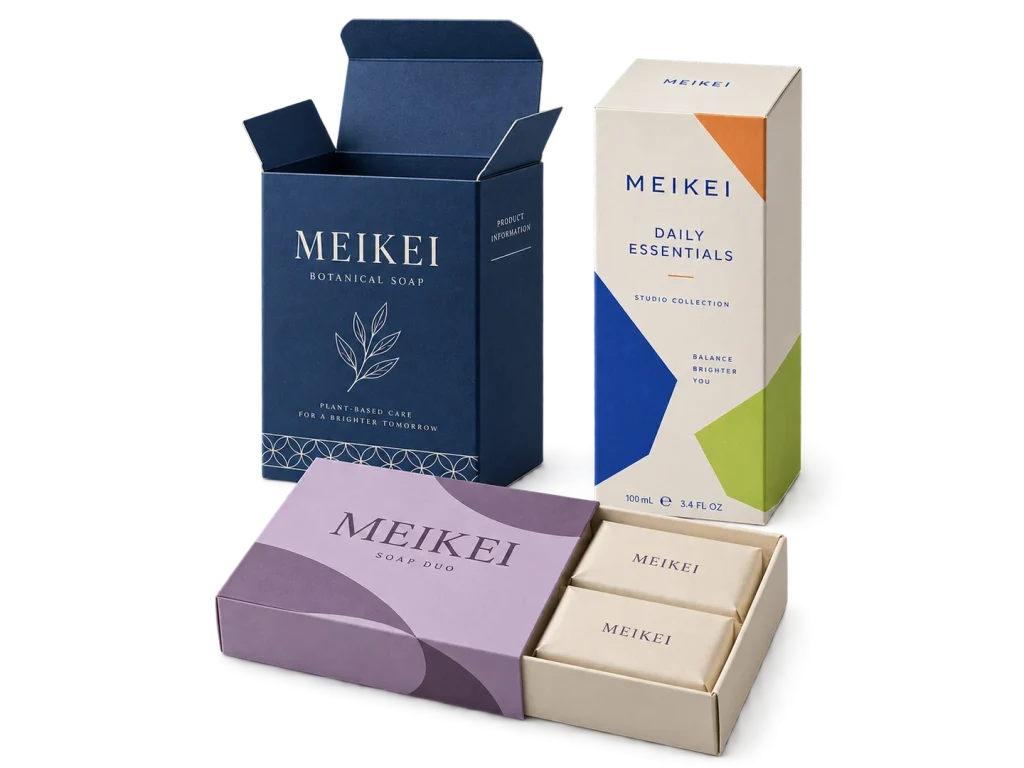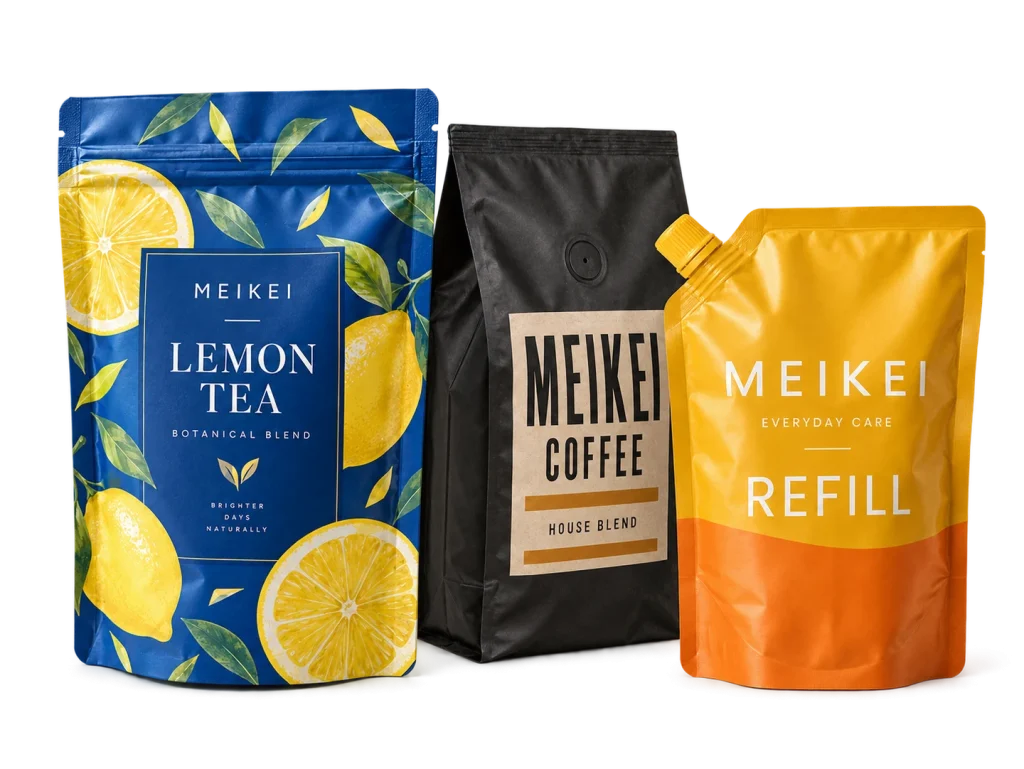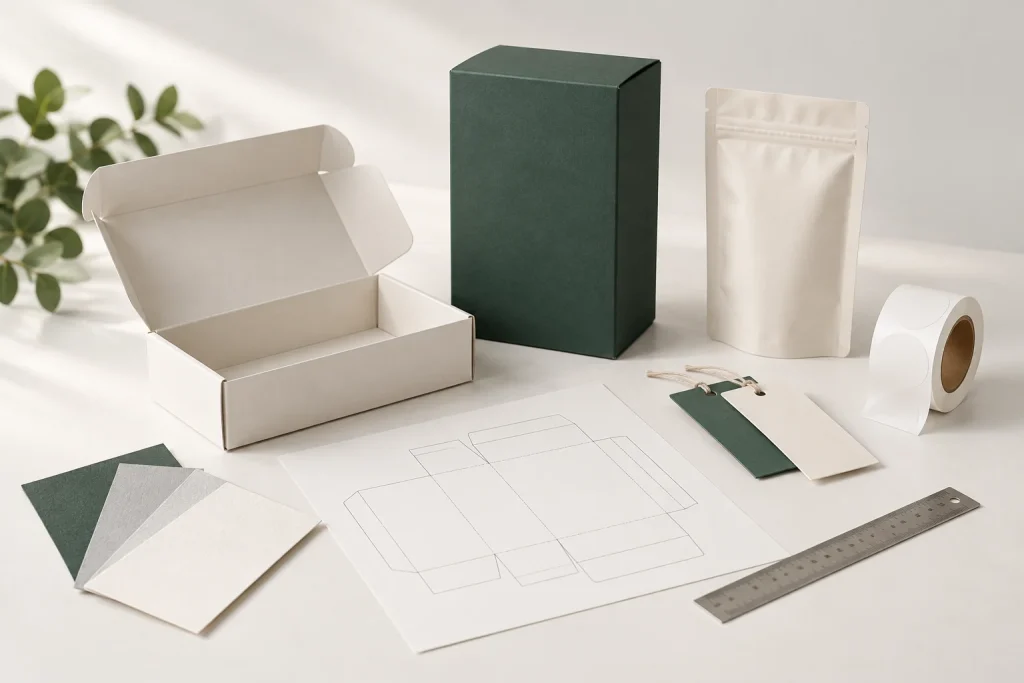
For a useful custom packaging quote, send the product, packaging format, dimensions, quantity by SKU, material direction, print and finish requirements, artwork status and delivery destination. Mark undecided details as open questions. That is more useful than allowing different suppliers to fill the gaps with different assumptions.
You do not need a complete technical specification to begin a conversation. You do need to distinguish what is fixed, what needs a recommendation and what the price must include. The checklist below can form the outline of your first enquiry.
1. Describe the product and packaging job
Share what goes inside or underneath the packaging, its dimensions and weight, and the number of items per pack. Photos or a physical sample help explain details that a measurement alone misses: a pump extending above a bottle, a fragile corner or a tapered container.
Explain the sales and delivery route. A display carton, gift presentation box and courier parcel have different requirements. If you are uncertain about the structure, use the carton, rigid box and mailer comparison to frame the options rather than selecting solely from a reference photo.
2. State what the dimensions mean
Label dimensions as product, internal pack or external pack dimensions, and specify the units. Attach a drawing where orientation could be unclear. Do not assume a quoted width and depth will be interpreted the same way by everyone.
For labels, include the container surface and application method. For pouches, provide the intended contents and fill weight rather than choosing size by weight alone; see the pouch format guide. For printed manuals, include page count, finished size and binding direction.
3. Break down quantity by version
| Brief item | Useful detail |
|---|---|
| Order quantity | Units required for each size or construction |
| Artwork variants | Quantity for each SKU, language or design |
| Price breaks | The realistic quantities you want compared |
| Repeat requirements | Expected reorder pattern, clearly marked as an estimate |
| Delivery splits | One shipment or separately packed destinations |
For example, “3,000 total across six designs” does not tell the supplier whether every design has 500 units. A simple SKU table removes that uncertainty. If future volumes are not committed, do not present them as part of the immediate order.
4. Define material, print and finish—or request alternatives
Send a material reference if one is already approved. Otherwise describe the desired appearance and functional conditions, then ask for clearly separated options. A “matte box” leaves the board, printing sides and surface process unspecified.
List special effects such as foil or embossing, including their approximate areas. Identify any inserts, windows, closures or cords. Ask for alternatives to be labeled so a lower-priced construction is not silently compared with a more elaborate one.
5. Separate production from development costs
- Is artwork ready, or is design or file correction required?
- Is structural development or a new dieline needed?
- Which samples or proofs are included, and what do they represent?
- Are tooling, plates, finishing dies or other setup items charged separately?
- What testing, inspection or documentation has been requested? State any required test reports, certificates or market-specific documents, and confirm whether the proposed material and construction have evidence for those exact requirements.
- Are packing, shipping and other delivery-related charges included or excluded?
Agree the commercial scope in writing. If a delivery term or responsibility is unfamiliar, ask the supplier and your logistics adviser to spell it out. This checklist is for organizing a quote, not for interpreting a shipping contract.
6. Distinguish the needed date from production lead time
State when and where the goods must be available. Then ask for the proposed sequence: specification confirmation, artwork approval, sampling, production and transit. A production estimate that begins after approval is not the same as the date your enquiry is sent.
Assign one person to consolidate approvals. If a launch date is fixed, identify which inputs can be supplied immediately and which are still being developed. Do not assume an unapproved sample or missing artwork can be absorbed into the same schedule.
7. Compare quotations on an equivalent basis
Before choosing, place the responses side by side and highlight differences in size, material, finish, quantity, packing and included services. Ask suppliers to clarify assumptions. The cheapest line item may describe a different product or leave work for your team to complete.
Agree a sample approval plan before production. Brands can discuss a brief through end-to-end packaging support; agencies and resellers can ask about trade program coordination. Browse the packaging product range and send your project details when the first version of the brief is ready.
Download the packaging quotation worksheet
Use this blank worksheet to collect dimensions, quantities, print requirements and delivery details for your request.
Download the blank CSV worksheet · Browse all buyer resources
Published by MEIKEI Printing as general packaging planning guidance. Material suitability, product performance and production details must be confirmed for your actual specification. Linked technical references support the relevant points; illustrations are not test evidence.