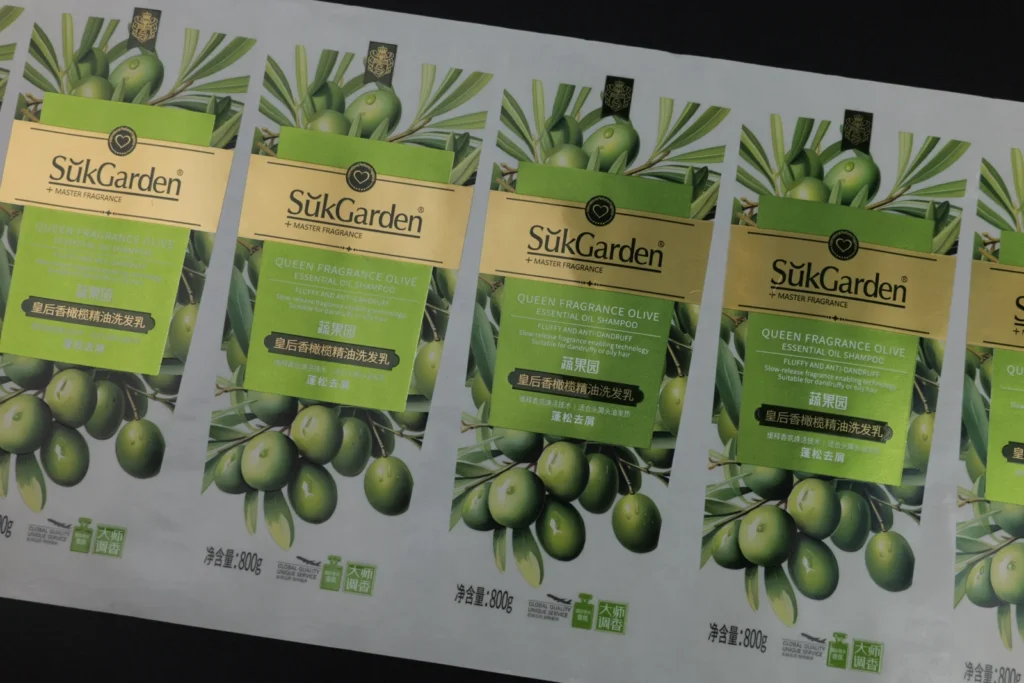
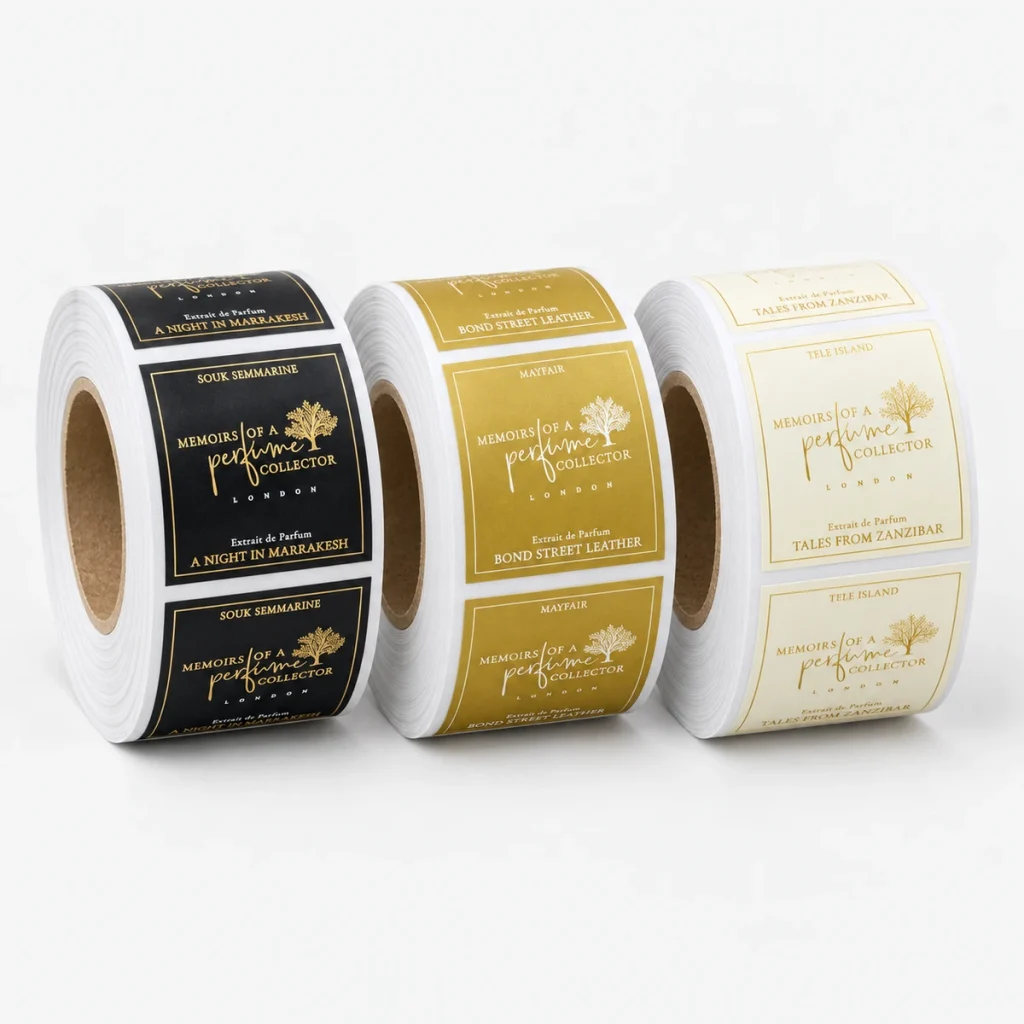
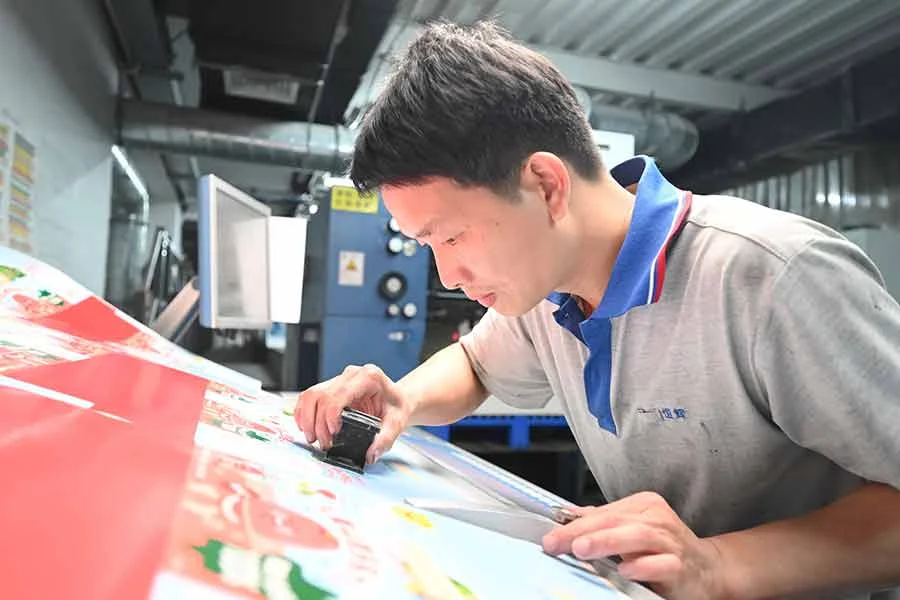
Choose between label varnish and lamination by the exposure the finished pack must survive, then approve the complete printed label on its container. A finish called “gloss” describes appearance; it does not tell you whether the printer has applied a liquid coating or a separate protective film.
For a label that will be wiped, rubbed or splashed repeatedly, include a laminated construction in your sample comparison. For a dry pack where you want surface protection without a separate film layer, ask about a suitable varnish. Neither choice removes the need to check the facestock, adhesive and any printing added later.
Key takeaways
– Varnish is a liquid-applied coating; lamination adds a film over the print.
– Compare specific constructions, not a blanket claim that every laminate outperforms every varnish.
– Test the finished label with your product and coding process before approving production.
What is the physical difference?
Varnish is applied over the printed surface and then dried or cured according to its chemistry. An overlaminate is a separate film bonded over that surface. Whitlam’s label construction guide describes varnish as either a full-surface or selective coating, while a laminate provides a protective film layer. This is distinct from the facestock beneath the ink: a film label can itself have either type of finish. Whitlam label construction guide
That distinction should appear on the purchase specification. “White film label, matte finish” leaves a production choice unresolved. Ask the supplier to identify the facestock, protective treatment and finish separately. Use our BOPP vs. paper label guide when the base material has not yet been selected.
Which option belongs in your sample comparison?
The following table is a buying framework, not a performance rating. Its purpose is to turn the pack’s intended use into a question the supplier can answer with a sample or technical specification.
| Your requirement | What to ask about varnish | What to ask about lamination |
|---|---|---|
| Cartons rubbing against each other in transit | Is the proposed coating intended for rub resistance? | Which film is proposed, and what happens at scuffed edges? |
| Repeated wiping with the packaged product | Does this coating resist that formulation after curing? | Does the finished laminate resist that formulation at its face and edges? |
| A natural paper texture | Can the coating preserve the intended feel? | Does the film obscure the texture you want customers to feel? |
| A small or flexible bottle | Does the finished construction stay flat through application and use? | Does the added film change fit or dispensing behavior? |
| Batch codes added by your production line | Is the coated surface compatible with the exact coding system? | Is the film printable, or is a separate coding area needed? |
| A particular matte or glossy appearance | Can you approve a coated production-material proof? | Can you approve the exact film on the actual print? |
Avery’s commercial guidance recommends laminate when handling, moisture and friction are major concerns. That is a useful starting point for selecting samples, rather than a universal ranking of every available finish. Avery’s varnish and laminate comparison
How much protection does a varnish provide?
Do not treat “varnished” as a complete resistance specification. Labelletiquette describes its protective varnish as protection against normal abrasion and recommends proofing the intended finish. That supports considering varnish for a suitable label, but it does not establish resistance to every cleaner, oil or cosmetic formula. Labelletiquette’s protective finish guidance
For repeated chemical contact or demanding handling, ask the converter for the named coating, relevant technical documentation and an agreed sample evaluation. A successful rub check with a dry cloth does not demonstrate that the same label meets a separate product-contact requirement.
The practical purchasing question is therefore: “What finish and test support this use?” If a quotation says only “UV varnish,” request the proposed specification and describe the expected contact. For a face oil, identify the actual oil formulation and whether leakage or handling causes the contact. For a bathroom product, distinguish occasional droplets from repeated cleaning.
Does lamination make a paper label waterproof?
Do not approve a waterproof claim from the presence of a top film alone. Avery’s UK guidance specifically notes that laminated paper can resist splashes without becoming fully waterproof. Avery UK finish guidance
Evaluate the actual die-cut label, including its edges, printed surface and attachment to the pack. A flat laminate swatch cannot demonstrate how the whole construction behaves on a filled bottle. Our waterproof vs. water-resistant labels guide explains how to define the exposure instead of relying on an ambiguous marketing term.
For a chilled product, write down where labeling occurs, whether condensation is present and what happens after filling. These details help the converter propose a complete construction rather than adding more protection to an unsuitable base label.
Will batch codes print over the finish?
Check the exact surface with the printer, ribbon or ink used on your line. Labelletiquette notes that thermal-transfer compatibility over protective varnish depends on the chosen material and machine. Treat coding as a separate approval item. Labelletiquette’s protective finish guidance
Mark the coding area in the artwork and state when the code is applied. If the supplier proposes leaving an area untreated, request that area on the proof. Check both the new code and its readability after the pack’s expected handling. Do not assume an uncoated patch is automatically compatible with every coding ink.
Keep barcode and code positions in the packaging artwork checklist so a later design revision does not cover the approved area with decoration.
How can you compare samples fairly?
Use the same artwork, container and intended exposure for both candidates. Ask the converter to identify any other changes between them; a different ink or facestock can make the comparison misleading.
This is a practical approval worksheet, not a standardized laboratory test:
- Label each candidate with its complete construction and sample reference.
- Apply it to the production container using the intended process.
- Photograph its initial appearance, including edges, fine text and codes.
- Expose both candidates to the same agreed handling, rubbing or product contact.
- Record what changed and where: ink removal, surface marking, whitening, edge lifting or unreadable codes.
- Keep an untreated reference sample and document the accepted result.
Agree exposure duration and acceptance criteria before the comparison. “Looks durable” is difficult to repeat; “product name and batch code remain readable, with no unacceptable edge lifting after the agreed handling sequence” is reviewable. Use the sample approval checklist to retain that decision with the approved artwork.
What should a quote request say?
Here is an illustrative specification, not a tested construction: “Label for a rigid cosmetic bottle; occasional contact with the supplied lotion; compare matte varnish and matte overlaminate on the proposed white facestock; preserve the marked batch-code area; supply labeled samples for application and wipe evaluation.”
Add label dimensions, order quantity, destination and your coding details. MEIKEI’s custom label options start from a confirmed minimum order of 100 individual labels. Send your label specification and product-use conditions so the finish can be quoted as part of the complete label.