Digital label printing is often worth quoting first when you have short runs, frequent artwork changes or many versions. Flexographic printing deserves a comparison when a design will run in larger, repeatable quantities. The useful question is not simply how many labels you need. It is how many of each design you need, in which material, with which finishing and delivery requirements.
A 6,000-label order can mean one repeated design or twelve designs with 500 labels each. Those are different production briefs, even though the total quantity is identical. This guide explains how to compare them without relying on a universal “switch to flexo above this quantity” rule.
Key takeaways
- Compare quantity per artwork version, not only total labels.
- Separate print setup, finishing, roll preparation and freight in the quotation.
- Approve color and appearance on the proposed material and finish.
- A digital or flexo label does not identify every step in its production route.
What is the difference between digital and flexo label printing?
Flexographic printing transfers ink using a relief plate for each printed color. Digital printing creates the printed image from a file without those conventional image plates. The digital imaging technology varies by press; “digital” does not necessarily mean inkjet.
Hally’s comparison describes polymer relief plates for flexo and a reimageable imaging plate plus blanket for its HP Indigo digital presses. Source: Hally Labels’ flexo and digital comparison, July 2021.
Digital vs flexo: what should the quotation explain?
Ask both suppliers to price the same finished label specification. Use this comparison to expose differences in the offers rather than to select a press from its name alone.
| Decision point | Digital quote: ask for | Flexo quote: ask for |
|---|---|---|
| Artwork versions | Quantity and file preparation for each version | Plate requirements and charges for each version |
| Repeat order | Price with unchanged artwork and specifications | Which existing plates or tools can be reused |
| Brand color | Proposed color method and physical proof | Proposed ink specification and physical proof |
| Decoration | Complete foil, varnish or embossing route | Complete foil, varnish or embossing route |
| Delivery format | Labels per roll, core, roll diameter and unwind | The same roll specification for a fair comparison |
| Delivered cost | All setup, conversion, packing and freight charges | The same cost categories, with one-time items separated |
The comparison does not replace material selection. A paper label and a film label should not be treated as equivalent bids just because their dimensions match. Set that part of the brief using our BOPP vs paper label guide before comparing production routes.
Why does the number of SKUs matter?
Make a quantity schedule for each artwork version. A flavor, fragrance, language or regulatory-copy change can create another print file, even when the label shape stays the same. Tell the printer which elements change and which remain common.
Here is an illustrative quantity schedule, not a price quote or a MEIKEI production record:
| Order arrangement | Artwork versions | Labels per version | Total labels |
|---|---|---|---|
| One established product | 1 | 6,000 | 6,000 |
| A twelve-product launch | 12 | 500 | 6,000 |
| An uneven launch allocation | 2 at 1,500; 6 at 500 | Varies by SKU | 6,000 |
The third arrangement is often the most useful way to describe a real purchasing requirement: specify the quantities you need rather than assuming every SKU sells equally. Ask for a quote against that schedule and a separate repeat-order quote for the likely replenishment quantities.
For serialization, changing barcodes or personalized text, state which fields vary and provide the data format. Hally’s guide identifies variable text, images and numbering as digital capabilities. Confirm the proposed workflow and the verification of printed data with the converter; a promise to print variable data is not itself a barcode inspection plan. Hally Labels.
Does digital printing eliminate tooling and finishing costs?
Removing conventional image plates does not remove every production step. The label still needs its specified shape, finish and delivery format. Ask the quotation to distinguish printing from cutting, decoration and roll preparation, including any one-time charges.
Equipment configurations also differ. Mark Andy specifies CMYK dry-toner electrophotography for its Digital One press, alongside an inline flexo decoration and converting station. Listed operations include spot color, varnish, lamination, cold foil, die cutting and slitting. This is a concrete example of a digital print engine operating with conventional finishing equipment. Source: Mark Andy Digital One specifications.
If your label includes metallic decoration, identify the required finish rather than writing only “gold.” An ink simulation, metallic substrate and foil treatment are different specifications. Use the hot foil vs cold foil label comparison to prepare that part of the inquiry.
Can a hybrid press change the comparison?
A hybrid production route can combine conventional stations with digital imaging. It makes the choice less binary: the relevant comparison is the route proposed for your job, including finishing, rather than two broad technology labels.
In a November 2, 2026 report, Mark Andy described a simulated eight-hour shift on its Digital Series HD HighSpeed 1200. The manufacturer reported 873,000 finished labels across 10 jobs and 25 SKUs, with one operator. This was a supplier demonstration of a particular configured system, not an independent industry benchmark or a MEIKEI production result. Source: Mark Andy demonstration report.
That example is a reason to ask what equipment and finishing route support your quotation. It is not a reason to assume your order will run at the demonstrated rate. Artwork, substrate, decoration, changeovers and delivery requirements must still be defined for your own job.
How should you compare color and appearance?
Use an agreed physical reference and a proof on the proposed construction. Give the printer your brand-color reference, identify critical colors and state whether you need a spot ink or will evaluate a process-color simulation. Ask how the approved reference will be carried into repeat orders.
For the ink specification itself, our spot color vs process color guide explains how to compare a dedicated brand-color ink with a process simulation and record the approval reference.
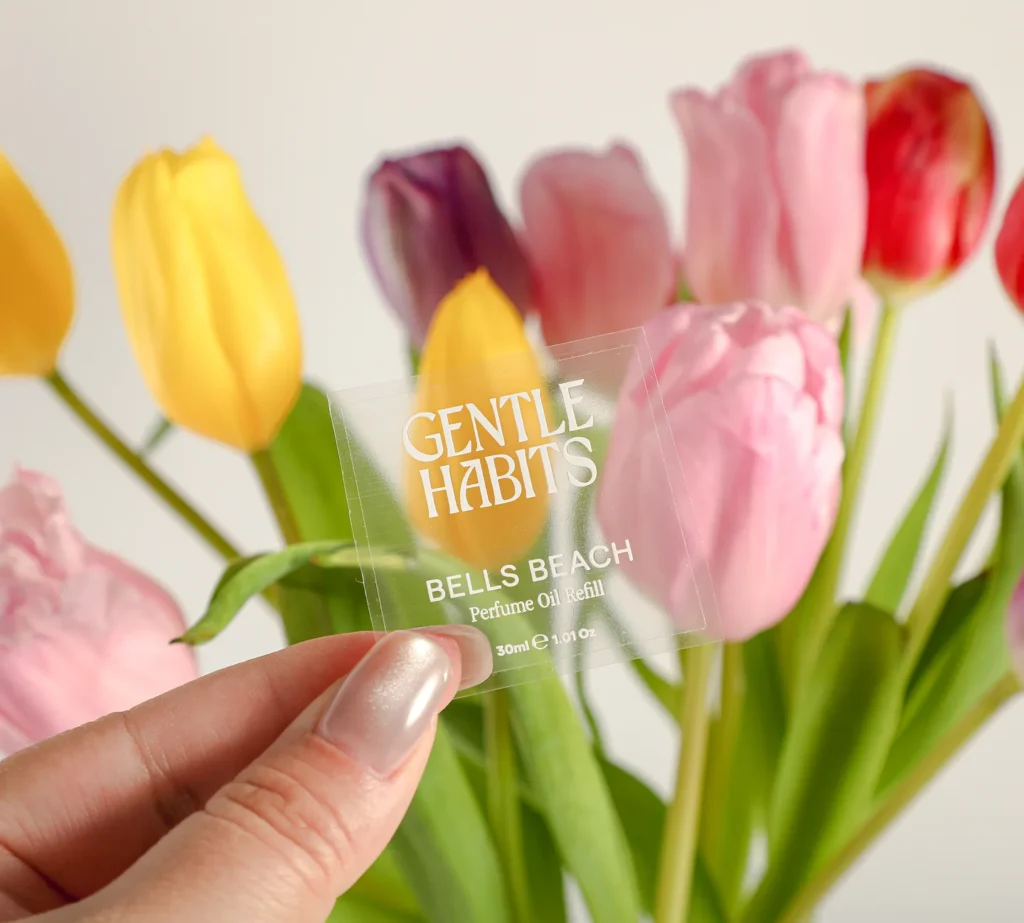
For a transparent label, specify the white-ink areas separately from the clear areas. A proof viewed on a white desk cannot answer every question about the same label on a dark bottle or colored liquid. Our clear labels and white ink artwork guide explains what to put in the artwork brief.
Do not rank all digital and flexo output by a single resolution figure. Review the features that matter on your own design: small reversed text, gradients, solid brand-color panels, white coverage and registration between print and decoration. Record the approved result so a later production change can be checked against it.
How do you compare the delivered order cost?
Request the complete price for the required quantities and delivery destination. Separate one-time charges from repeatable charges so the next order does not inherit the assumptions of the first.
Order comparison = setup + printed quantities + finishing and roll preparation + packing + freight.
Use actual supplier quotations for each term. If taxes or import charges are excluded, record that alongside the delivery terms. Then compare the quantity you will actually use: ordering substantially more of a version that may change next month can make a low unit price a poor purchasing decision.
For machine-applied labels, include the unwind direction, roll core and outside diameter in both requests. A lower quote for an incompatible roll format is not a comparable offer.
Request a quote with the information you already have
MEIKEI accepts inquiries from 100 individual labels. Send your label dimensions, quantities by design, bottle or product photo, intended use and delivery country. Include the artwork and finish requirements if they are ready; if they are not, describe the result you want.
Browse our custom roll labels and send your label brief. Ask for the proposed print and finishing route to be stated in the quotation, so you can compare the finished order rather than guess from a press category.