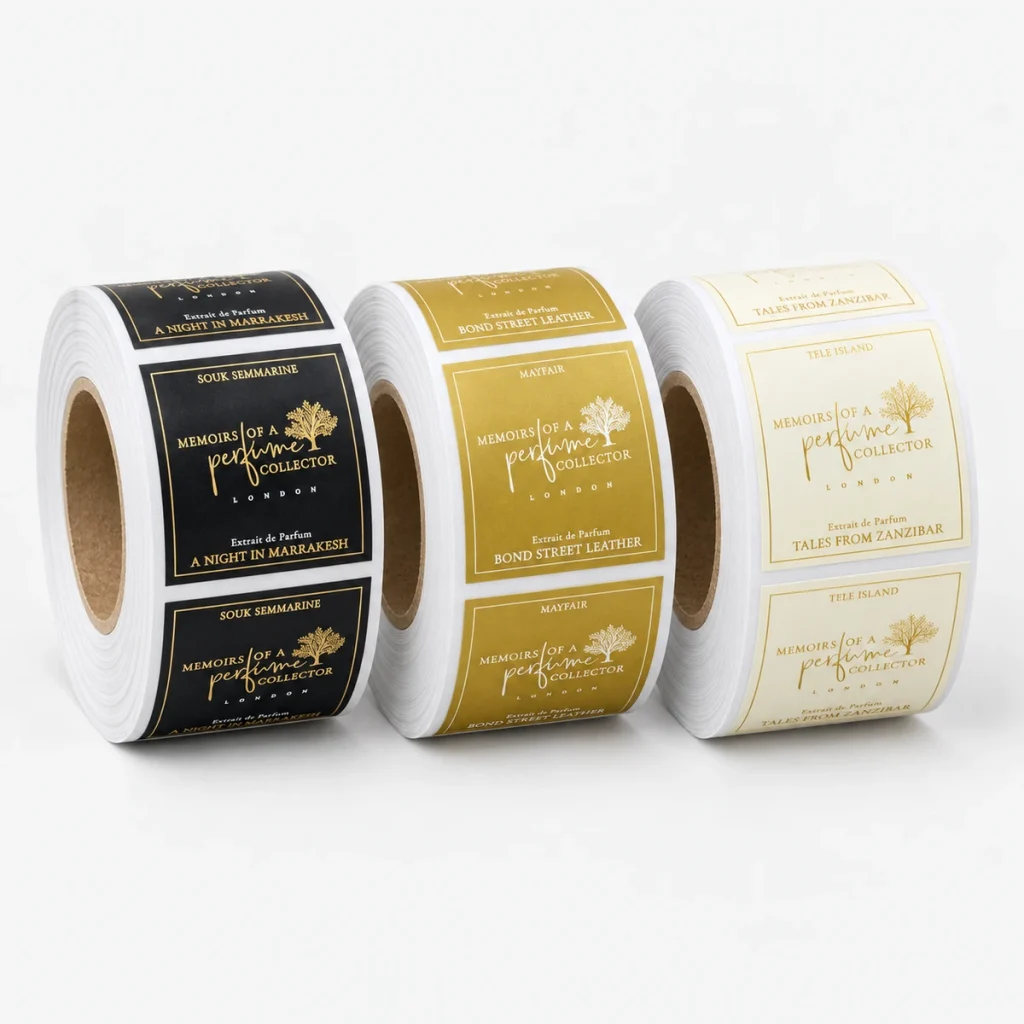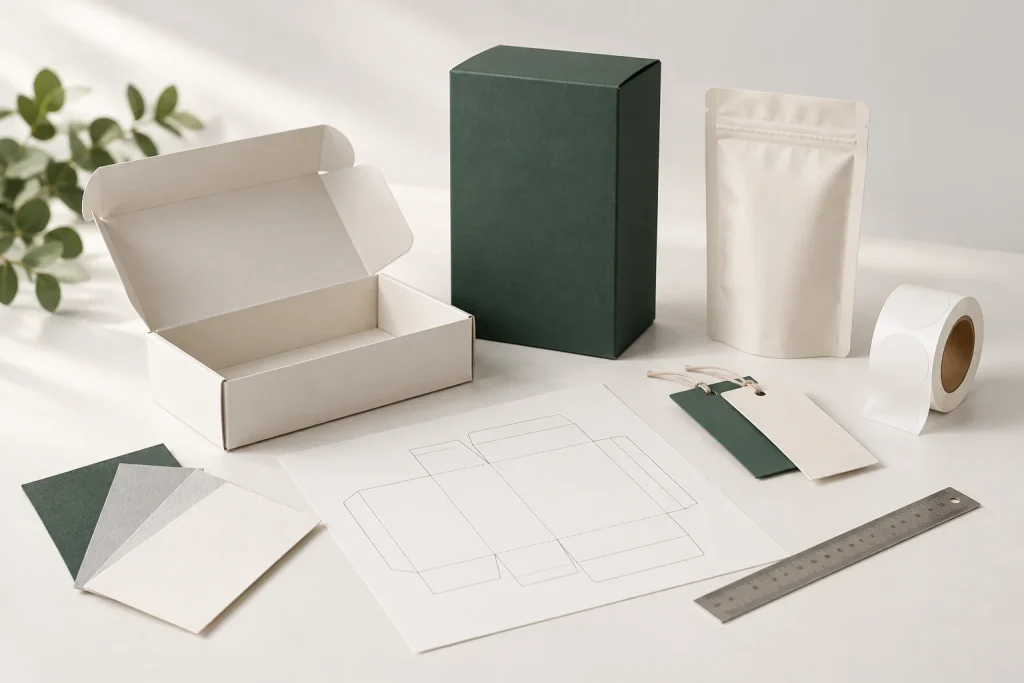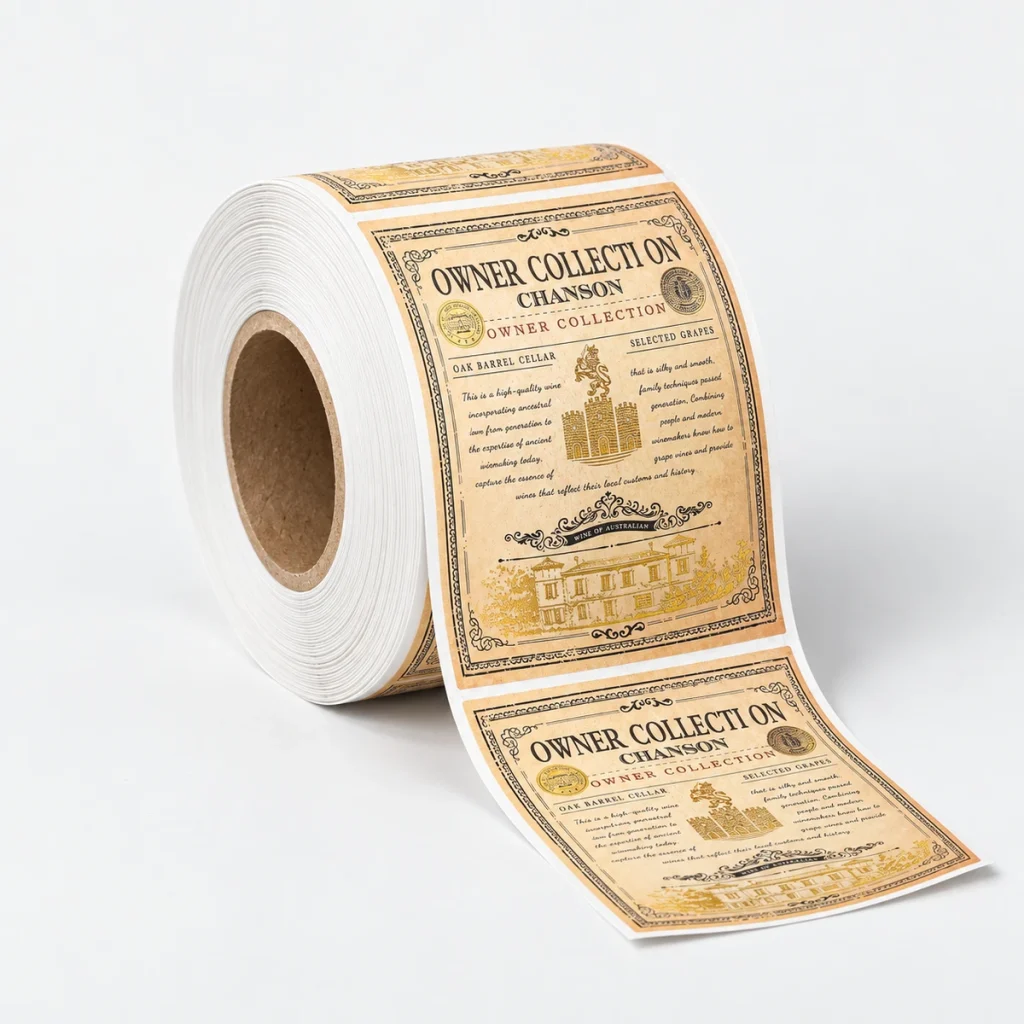
Roll and sheet describe how labels are supplied. Kiss-cut and die-cut describe how they are cut. Custom shape describes the outline. These are not five mutually exclusive materials. A custom-shaped paper label can be kiss-cut and supplied on a roll.
Keeping those choices separate makes a quote more useful and helps prevent a production mismatch. Begin with the application process: a hand-applied promotional sticker and a bottle label running through an applicator may share artwork, but they do not necessarily need the same liner or supply format.
Separate the four parts of the specification
| Question | Examples | What it determines |
|---|---|---|
| How is it supplied? | Roll, sheet, individual piece | Handling, storage and application |
| How is it cut? | Kiss-cut; through-cut individual sticker | How the printed face separates from its backing |
| What is the shape? | Rectangle, circle, custom contour | The finished outline |
| What is it made from? | Paper, BOPP, other specified films | Appearance and material performance |
Roll labels: coordinate with the applicator
Rolls keep repeated labels on a continuous liner and can be used for hand or machine application. If a labeling machine is involved, send its requirements before the job is imposed. A roll that fits the printed design can still be incompatible with the machine.
- Core and roll size: confirm the core diameter and maximum outside diameter.
- Winding direction: use a diagram showing which edge leads and whether labels face inward or outward.
- Spacing and liner: confirm the gap, liner width and any sensing requirements with the equipment operator.
- Quantity: agree labels per roll and how separate SKUs will be identified.
Do not approve a winding instruction from a phrase such as “standard direction” alone. A marked drawing or an example roll is easier for the buyer, printer and packer to interpret consistently.
Sheet labels: organize hand application
Sheets are practical when an operator needs to see and pick labels from a flat layout. They can help organize short runs, sample packs or several designs. Specify the sheet size, layout and quantity of each design rather than assuming a particular office-paper size.
For a mixed-design sheet, decide whether the operator should use every label as a set or pull one design independently. If the labels will be overprinted later, check the printer, material and sheet compatibility before ordering the preprinted stock.
Kiss-cut vs die-cut: check the backing
A kiss-cut passes through the label face and adhesive while leaving the release liner intact. In common sticker sales terminology, an individual die-cut sticker has its face and backing cut to the outline. Avery’s explanation of the two sticker types makes this backing distinction clear.
There is a terminology trap: converters also use “die cutting” for the general production process, including labels made on a continuous liner. If your request says “die-cut labels,” add whether you want individual pieces, a sheet, or a roll. The delivery format matters more than the shorthand.
A custom shape still has production limits
Custom contours can follow a brand mark or product silhouette, but very narrow details, sharp internal corners and tiny protrusions deserve review. Ask whether the outline can be cut, stripped and dispensed reliably with the selected material.
Keep the artwork’s cut path separate from the visible print. Allow the specified bleed outside the cut and keep important text inside the safe area. Use our packaging artwork checklist when preparing the production file.
How many labels, sheets or rolls are you ordering?
State the total number of individual labels first, then the packing arrangement. MEIKEI’s label MOQ is 100 individual labels. A request for 100 sheets is a different quantity unless each sheet contains only one label.
Illustrative calculation, not a production specification: 100 labels arranged 10 per sheet would make 10 sheets. The same 100 labels supplied 50 per roll would make two rolls. Sheet layout and roll quantities must still suit the agreed label size, material and packing method.
| Specify | Roll supply | Sheet supply |
|---|---|---|
| Total label count | Individual labels required, split by artwork version. | Individual labels required, split by artwork version. |
| Packing arrangement | Labels per roll and how any remainder is packed. | Labels per sheet and whether designs are grouped or mixed. |
| Working dimensions | Core, maximum outside diameter, liner width and gap. | Sheet size, margins, spacing and peeling access. |
| Application check | Inside/outside winding, leading edge and machine sensing requirements. | Operator picking sequence, or printer compatibility if overprinting. |
For machine application, have the packing team approve one specification revision shared with the printer. HERMA’s roll-label guide explains that core size and inward or outward winding are matched to equipment; its standard dimensions are not a universal requirement for your machine. For clear labels, ask the operator to check the sensing arrangement with the proposed material as well.
Build the order through custom roll labels or custom sheet labels. Upload your artwork with the product specification; a reference photograph can help explain the intended result, while the final cutting and printing file is reviewed separately.
After choosing the label format, compare digital and flexo label printing using your quantity per design, finishing requirements and delivered-order costs.
SAMPLE DETAILS
What to confirm on a label roll
Use a physical roll sample alongside the applicator specification. A photograph cannot confirm its core dimensions, unwind direction or compatibility with your equipment.
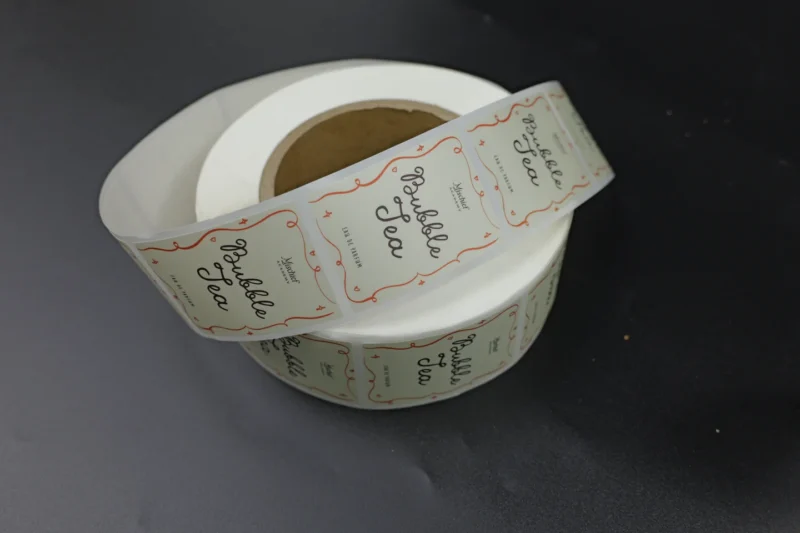
Labels supplied on a roll
The roll format is only part of the specification. Confirm the core diameter, maximum roll diameter, label gap and unwind direction against your applicator requirements before production.
Configure roll labelsAn example of a clearer label request
Illustrative brief: “A custom-shaped label on white BOPP, supplied on rolls for our applicator. We will provide the approved outline, material performance requirements, winding diagram, core size and quantity by design. Please quote the print and protective finish separately.”
That brief distinguishes the choices without assuming that a material, adhesive or machine setting has already been approved. Compare BOPP and paper label materials, explore custom label formats, and use the quote preparation checklist to finish the project specification.
Published by MEIKEI Printing as general packaging planning guidance. Material suitability, product performance and production details must be confirmed for your actual specification. Linked technical references support the relevant points; illustrations are not test evidence.