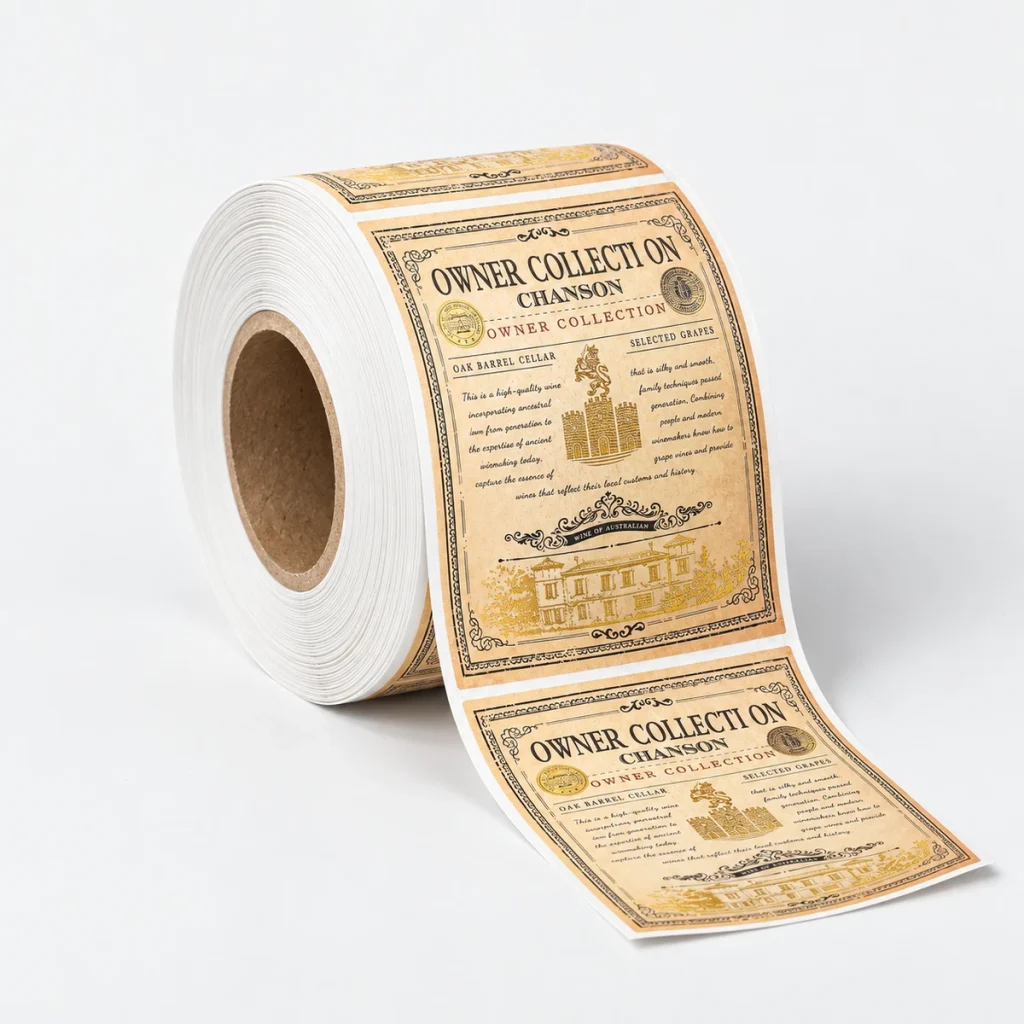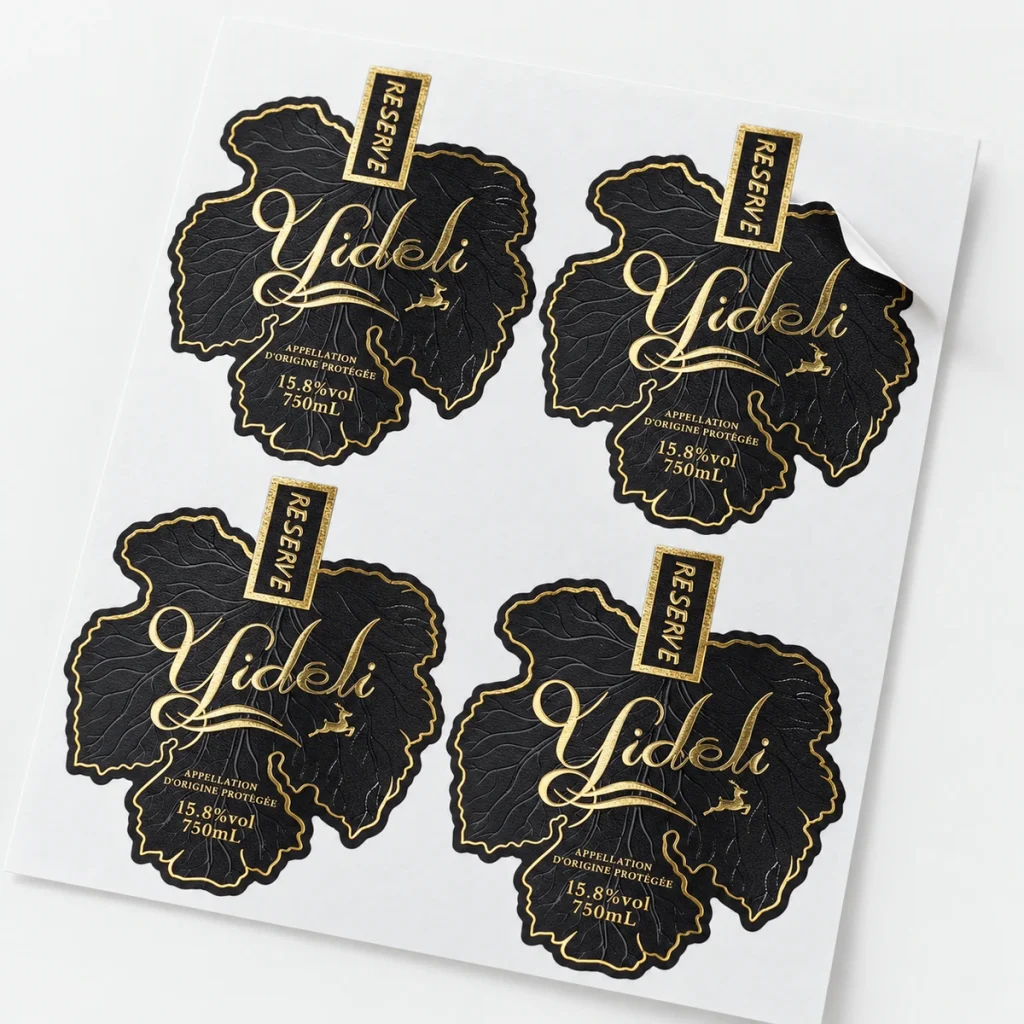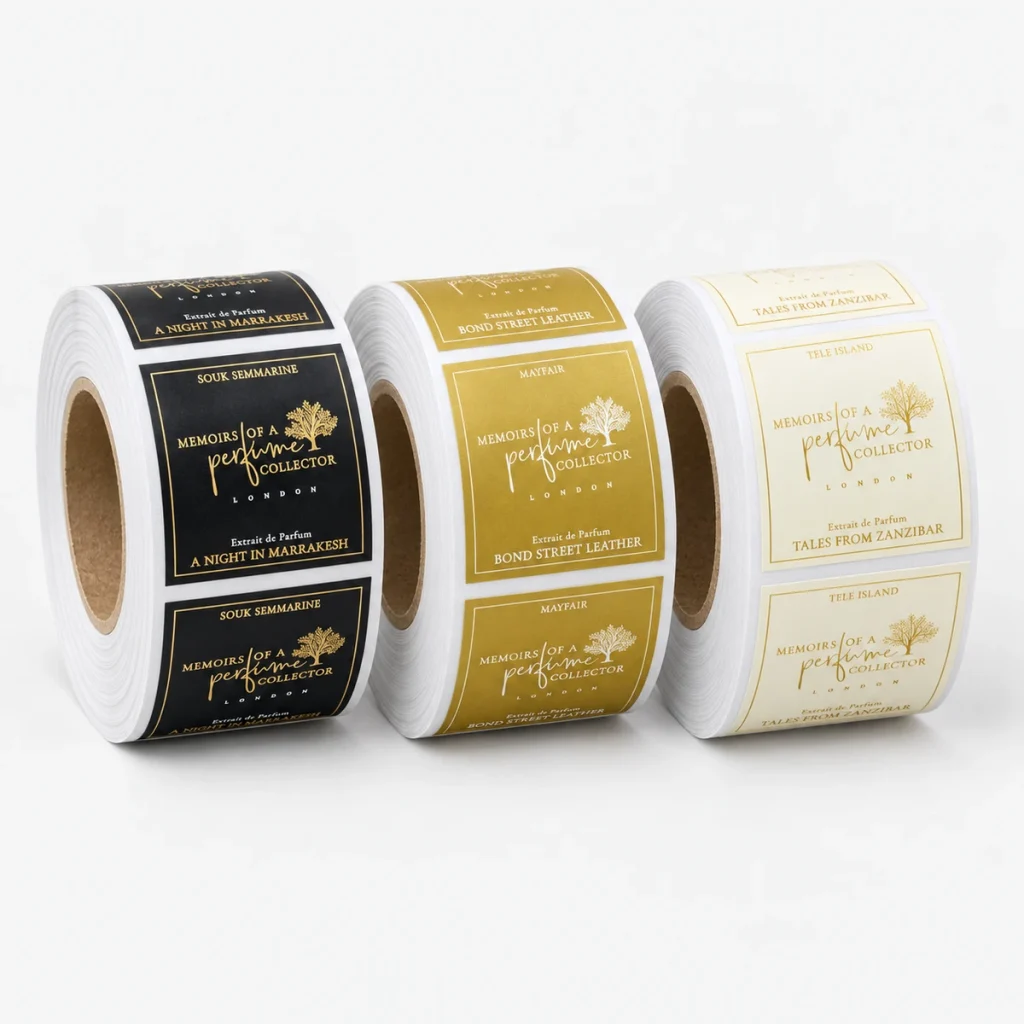
BOPP is a film label face material; paper is a fiber-based face material. BOPP is often a useful starting point where moisture exposure matters. Paper offers a wide range of printed and tactile appearances. The finished label’s performance also depends on its adhesive, ink, protective surface and the container it is applied to.
A specification that only says “waterproof sticker” leaves important questions unanswered. Will the package sit in a bathroom, be handled with oily fingers, or be filled after labeling? Those are different conditions. Start with the use case, then choose the material and adhesive system.
What is BOPP?
BOPP stands for biaxially oriented polypropylene. White and clear films give different design possibilities: white provides a background for the print, while clear film can show the container through unprinted areas. An opaque white ink layer may be needed behind selected graphics on a transparent label.
Film does not mean every container application is interchangeable. Avery Dennison’s film materials guide distinguishes film options by properties including conformability. A squeezable or tightly curved container deserves its own material review; do not select BOPP solely because it worked on a rigid jar.
What paper can offer
Coated paper can support crisp printed graphics. Uncoated and textured papers can make the surface feel more tactile, while kraft paper gives the artwork a colored base. These are visual starting points, not promises that all stocks have the same print response or resistance to liquids.
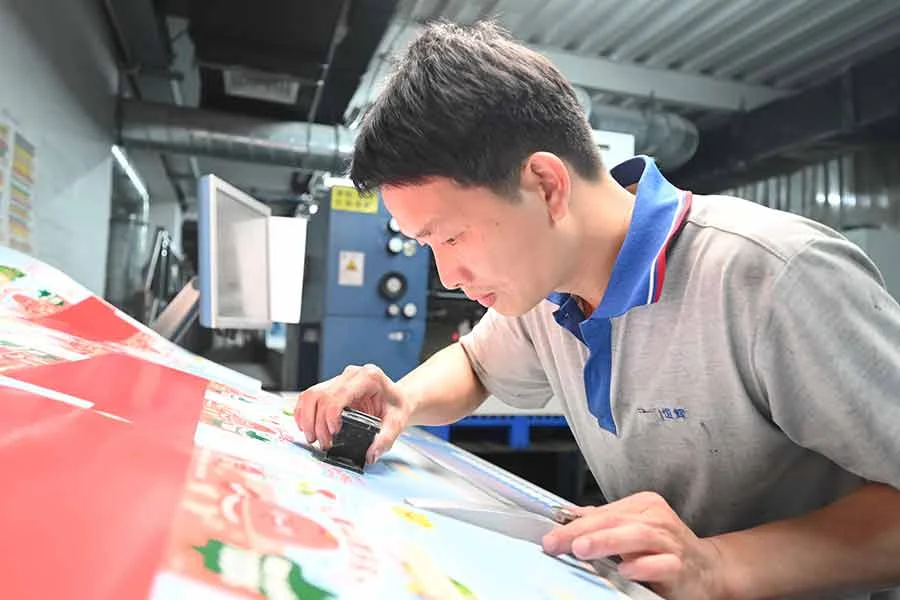
Put artwork on the actual stock before approving color. A color that appears bright on white coated paper may look different on brown kraft. A laminate or coating can alter both appearance and feel, so the material sample and the finished print sample answer different questions.
| Decision | BOPP starting point | Paper starting point |
|---|---|---|
| Visual effect | Clear, opaque or other film effects | Coated, uncoated, kraft or textured surfaces |
| Moisture exposure | Assess the full film/adhesive/print construction | Check the specific stock and protective finish |
| Container movement | Review film stiffness and conformability | Check lifting, wrinkling and label size on the actual pack |
| Brand color | Confirm white ink and opacity where needed | Account for the paper’s base color and texture |
The adhesive is a separate decision
The face material is the part you see; the adhesive is what holds it to the container. Ask the supplier to review the surface material, texture, curvature and application conditions. Glass, coated glass and different plastics should not be treated as one application.
Application temperature is also not the same as the conditions after application. Explain when the label is applied, whether the container is dry, how soon it is filled or chilled, and how it will be stored. Request the proposed construction’s technical data rather than relying on a general “permanent” description.
Removable is an adhesive-performance requirement, not a stand-alone face material. Similarly, holographic describes a visual material effect; it does not tell you whether the label is supplied on rolls or sheets. Our label format and cutting guide separates those choices.
A small test plan before a large order
- Apply samples to the actual production container, including its coating or surface treatment.
- Record cleaning, application pressure and the waiting period before evaluation.
- Check edges, corners, bubbles and readability after normal handling.
- Repeat the intended moisture, temperature or contact exposure using an agreed procedure.
- If removal matters, assess residue and removal behavior after the agreed period.
Photograph the labels immediately after application and at each agreed checkpoint. Keep the sample ID and material code with the results so a replacement stock is not confused with the approved one. A quick test on an empty sample jar is useful for screening, but it does not reproduce every filled-product condition.
Write a specification that can be quoted
A useful brief includes label dimensions, shape, material direction, adhesive requirement, print colors, finish, quantity per design and application method. Explore custom labels and stickers for available starting formats, and compare matte, gloss and soft-touch finishes separately from the face material.
Bring the chosen construction into a documented sample approval process rather than treating a screen image as material approval.
Published by MEIKEI Printing as general packaging planning guidance. Material suitability, product performance and production details must be confirmed for your actual specification. Linked technical references support the relevant points; illustrations are not test evidence.