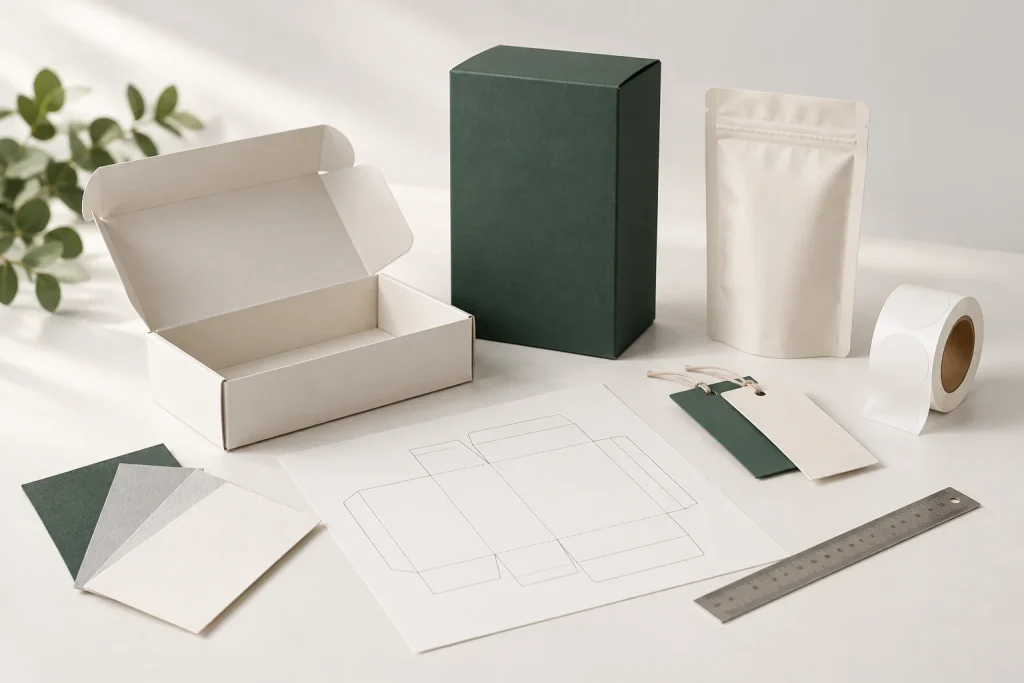
A packaging sleeve makes sense when a product already has a suitable container and needs printed branding, a variant identifier or a gift presentation. A folding carton makes sense when the packaging must also enclose the product, provide usable panels and support a defined packing method. Comparing their unit prices before deciding who does those jobs can make the cheaper quotation misleading.
This guide compares a simple paperboard sleeve with an enclosed folding carton. A tray-and-sleeve pack is a separate, two-component construction: the tray does work that an open-ended sleeve cannot do alone. Browse our folding carton options alongside the decisions below.
Key takeaways
– Choose a sleeve around an existing pack when the underlying pack already provides the required containment.
– Choose an enclosed carton when exposed ends, missing information panels or product movement would create problems.
– Compare the cost of the complete packed unit, including the underlying container and packing work.
– Approve sleeve fit on the actual finished pack, not only a nominal box size.
What is the structural difference?
A simple packaging sleeve is an open-ended band. A folding carton has panels and closures that form an enclosure. Neither description, by itself, establishes that a pack will protect a fragile product during parcel delivery.
PackMojo’s sleeve product specifications distinguish pre-glued sleeves, flat sleeves and versions supplied with adhesive. Those distinctions matter at the packing bench: sliding on a formed band and wrapping a flat piece are different operations.
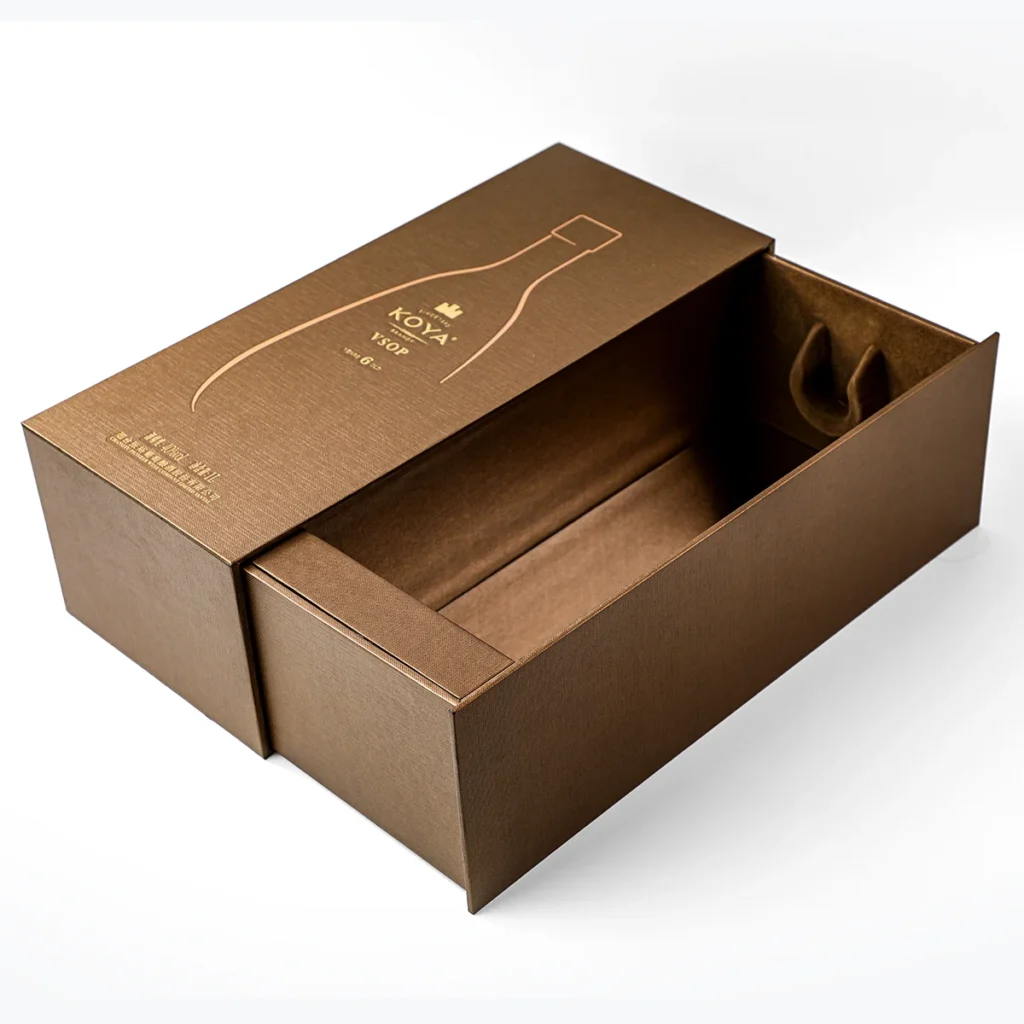
Ask a supplier to name the supplied construction on the quotation. “Sleeve box” could mean a band, a sleeve with a separate tray, or a complete drawer-style pack. A photograph alone may not make that difference obvious.
Which format answers your packaging problem?
Use the job the packaging must perform as the first selection criterion. The table is a purchasing decision aid, not a performance certification.
| Packaging requirement | A simple sleeve can fit when… | An enclosed carton deserves priority when… |
|---|---|---|
| Product containment | An existing box, tray or primary pack already contains the item | The proposed band would leave loose parts or vulnerable surfaces exposed |
| Seasonal branding | The underlying pack stays unchanged while the printed message changes | The whole pack needs a different shape, opening or presentation |
| Information space | Required text and codes fit legibly on the available band | Extra panels are needed without shrinking important content |
| Product visibility | Open ends intentionally reveal the product or base pack | You need controlled coverage or a more consistent shelf appearance |
| Multiple variants | Shared underlying packs are practical and each sleeve is clearly identified | Different products need different internal supports or dimensions |
| Parcel delivery | The sleeve is one component inside an approved shipping pack | The retail carton must first be designed as part of a shipping system |
The decision can differ within one range. A printed band around an existing gift box may be sensible, while the same band around an unprotected glass jar may leave several unresolved requirements.
Does a sleeve actually reduce the total cost?
A sleeve can reduce the amount of custom printed packaging you buy, but it does not remove the cost of whatever sits underneath it. Compare complete alternatives for the same packed product and quantity.
Use this simple calculation:
Packed-unit cost = printed components + underlying container + inserts or seals + packing labour + allocated setup and delivery costs.
For example, suppose a business already purchases an unprinted carton that performs well. Adding a seasonal sleeve may let it retain that carton. If the business has no existing container, a sleeve quotation must be combined with a tray or box quotation before comparison. This is an illustrative purchasing scenario, not a customer result or a claim that either format is always cheaper.
Keep separate lines for tooling, samples and repeat-order production. Also ask whether the same artwork and dimensions can be reordered without a new structural setup. Our packaging quotation checklist covers the other information needed for comparable bids.
How should a sleeve be sized?
Size a sleeve around the finished object it must slide over, including lids, labels, seams and any surface treatment. A nominal internal box dimension does not describe that outside envelope.
Record the direction of sliding and show which face should remain visible. Supply an actual packed sample where possible. A lid that projects slightly beyond its base, for example, creates a different fit problem from a straight-sided carton.
PackMojo publishes its own clearance guidance for pre-glued sleeves, illustrating that a supplier specifies fit allowances for its construction. Do not transfer another supplier’s allowance directly to your job. The selected board, crease positions, finishing and base-pack variation need to be considered together.
The sample approval question is practical: can an operator fit the sleeve without scraping the decoration, and does it stay in its intended position during ordinary handling? Record the observed problem before asking for a size change. “Difficult to pass over the lid” gives a designer more useful information than “too tight.”
Which artwork decisions are different on a sleeve?
The sleeve’s front face must stay aligned with the pack’s front face. Decide where the join and opening edges will sit before arranging the graphics.
Keep identification clear if the sleeve can be removed. A variant name printed only on a removable band may leave otherwise identical containers difficult to distinguish during packing or use. Decide what information belongs on the sleeve and what also needs to remain on the underlying product pack.
Check whether the sleeve covers an existing barcode, batch field or instruction. This is especially relevant when adding a promotional sleeve to an already approved package. A new decorative layer can unintentionally hide information that was accessible before.
Use the supplier’s final dieline to position graphics. The packaging dieline guide explains how to distinguish cut lines, folds and glue areas without treating a screen mockup as a production file.
How do you compare the two samples fairly?
Pack the same real product into both proposed constructions. Compare the complete assembly in the situation it will encounter, rather than judging an empty sleeve against a filled carton.
For an initial comparison, record:
- Who assembles the pack and which steps require separate handling.
- Whether the product can move, slide out or obscure the intended presentation.
- Whether printed surfaces rub during assembly or removal.
- Whether all required content remains accessible after packing.
- Whether the finished pack fits the intended shelf or outer shipping arrangement.
These observations help select the design; they do not replace a distribution test where one is needed. Agree the sampling and approval process before production using the sample approval checklist.
What should you send for a useful quotation?
Send a photograph and dimensions of the actual product or existing pack, the quantity, the proposed sales channel and the problem you want to solve. State whether the enquiry is for a sleeve alone, a tray-and-sleeve assembly or an enclosed carton.
If both routes remain plausible, request two complete constructions for comparison. MEIKEI accepts folding carton enquiries from 100 finished cartons; a sleeve or multi-component assembly should be quoted against its own confirmed specification. Send the product and packaging brief so the quotation can address the complete pack rather than an attractive but incomplete component price.