Choose permanent label adhesive when the label should remain attached through the product’s intended use. Choose removable adhesive when the buyer needs to peel the label away under defined conditions. Neither name proves suitability for a particular surface. Confirm the container, the labeling conditions and what a successful removal should look like before ordering.
A beautiful printed label can still be the wrong construction for the pack. This guide helps you write the adhesive part of a custom label specification; use the separate BOPP versus paper guide for the face material.
- State whether the label must stay on, peel off or be repositioned.
- Describe the actual surface and the conditions during labeling and use.
- Evaluate removal after the intended period, not only immediately after application.
- Approve a specific material construction and sample record rather than the word “removable.”
Permanent and removable labels: what are you specifying?
The useful distinction is the required end result. A product identification label that should remain on a bottle has a different job from a temporary price label on a reusable display. Start with that job and ask the supplier to identify a suitable construction.
| Decision | Permanent adhesive brief | Removable adhesive brief |
|---|---|---|
| Intended life | How long the label must remain attached and legible. | When the label will be removed and who will remove it. |
| Failure to check | Unwanted edge lift, movement or detachment. | Residue, label tearing or damage to the underlying finish. |
| Surface detail | Actual container material, coating, shape and condition. | The same details, including any finish that must survive peeling. |
| Approval record | Attachment after the agreed handling and storage sequence. | Attachment during use plus removal after the agreed exposure and duration. |
Avery Dennison’s adhesive glossary defines permanent and removable adhesives. For your brief, also state whether operators need to correct placement during application. That is a separate requirement from peeling the label off later in the product’s life; include both needs if they apply.
Start with the real container surface
Send the surface the adhesive will actually touch. “Plastic bottle” leaves out the resin, any coating, the surface texture and the curve where the label sits. Even a photograph of the finished pack cannot answer all of those questions. A physical container and its material specification give the supplier a better starting point.
HERMA’s removable-label guidance describes suitable surfaces as smooth, dry, undamaged and dust-free. Those conditions apply to the products it describes; they illustrate why a removal promise needs a defined surface. A trial on clean glass should not be treated as approval for a coated carton.
Record whether labeling happens before or after filling, cleaning and capping. Include surface moisture or handling contamination in the discussion. If the container supplier changes its coating, retain the old approved reference and arrange a new compatibility review.
Separate application temperature from service temperature
Application temperature describes the labeling stage; service temperature describes the conditions the applied label will encounter. Avery Dennison’s Adhesive Technologies technical guide treats them separately. A later cold-storage requirement does not by itself tell the supplier whether the label is applied to a warm, chilled or wet container.
Write the sequence in plain language: container condition at labeling, time before the next operation, storage conditions and expected use. Ask for the proposed adhesive’s own data sheet and review it against that sequence. Avoid substituting a generic “freezer-safe” or “waterproof” description for the agreed construction and conditions.
Define what a successful sample must do
Agree the observations before comparing samples. “It seems sticky” is difficult to use as an approval record. For a removable construction, specify whether the label must come off in one piece, whether visible residue is acceptable, and whether any change to the surface finish counts as failure.
HERMA’s removable-adhesive portfolio lists several formulations with different initial and final adhesion, and calls for the labeling material to be considered. This supports selecting a particular label construction for a task, rather than assuming all removable labels perform alike.
- Identify each candidate. Record the face material, adhesive reference, finish and label dimensions.
- Apply it as the packing team will. Use the intended container and agreed application conditions.
- Follow the planned sequence. Include the storage and handling conditions relevant to the product.
- Inspect at agreed intervals. Record attachment and, when required, removal behavior. Retain photographs and the sample identification.
- Approve or revise. Name the decision owner and unresolved checks before production.
This is a procurement review framework, not a standardized laboratory test. For a formal performance requirement, agree the method and acceptance criteria with the supplier. The sample approval checklist helps keep structure, print and performance decisions separate.
Send a brief the label supplier can act on
Include the container material and coating, label dimensions, intended service life, application method, temperature sequence and removal requirement. Add the quantity by artwork version and the destination country. Keep any known failure photographs with the sample reference so the supplier can see what needs to change.
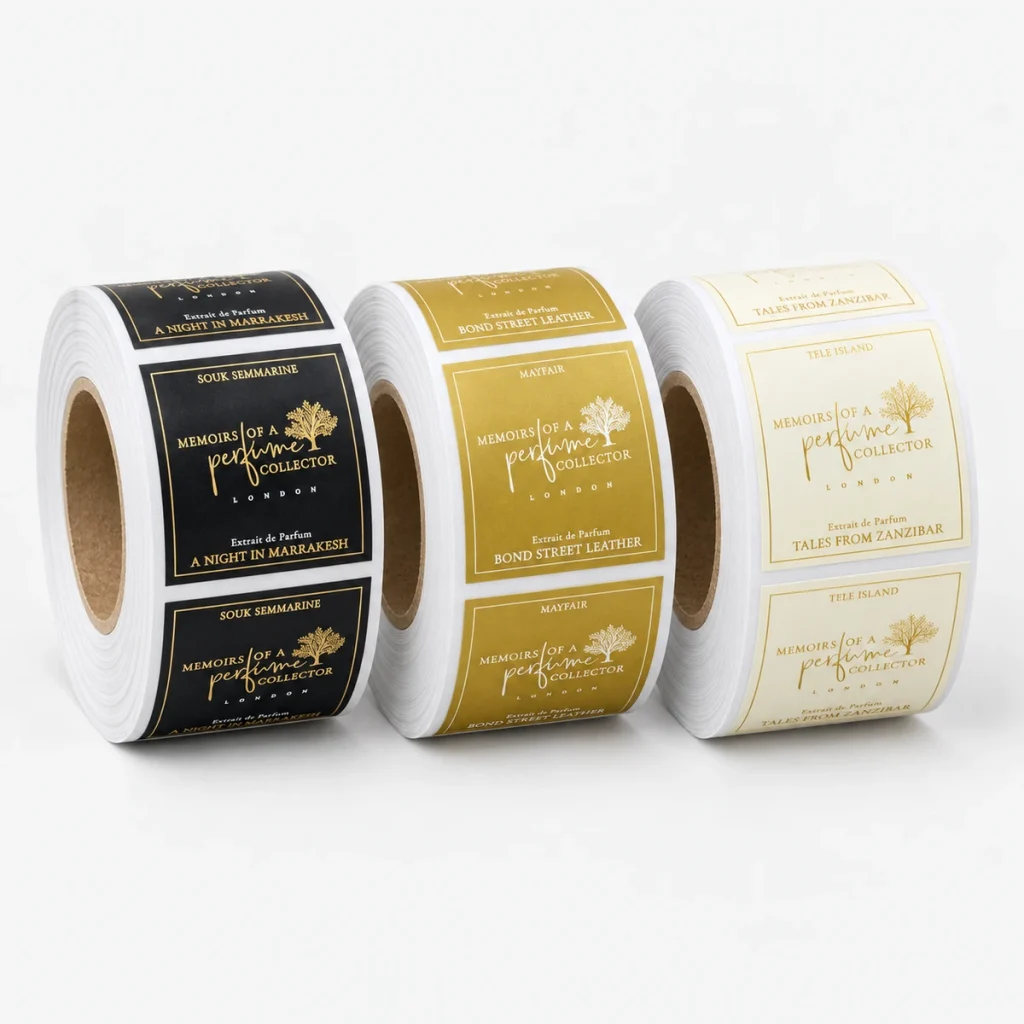
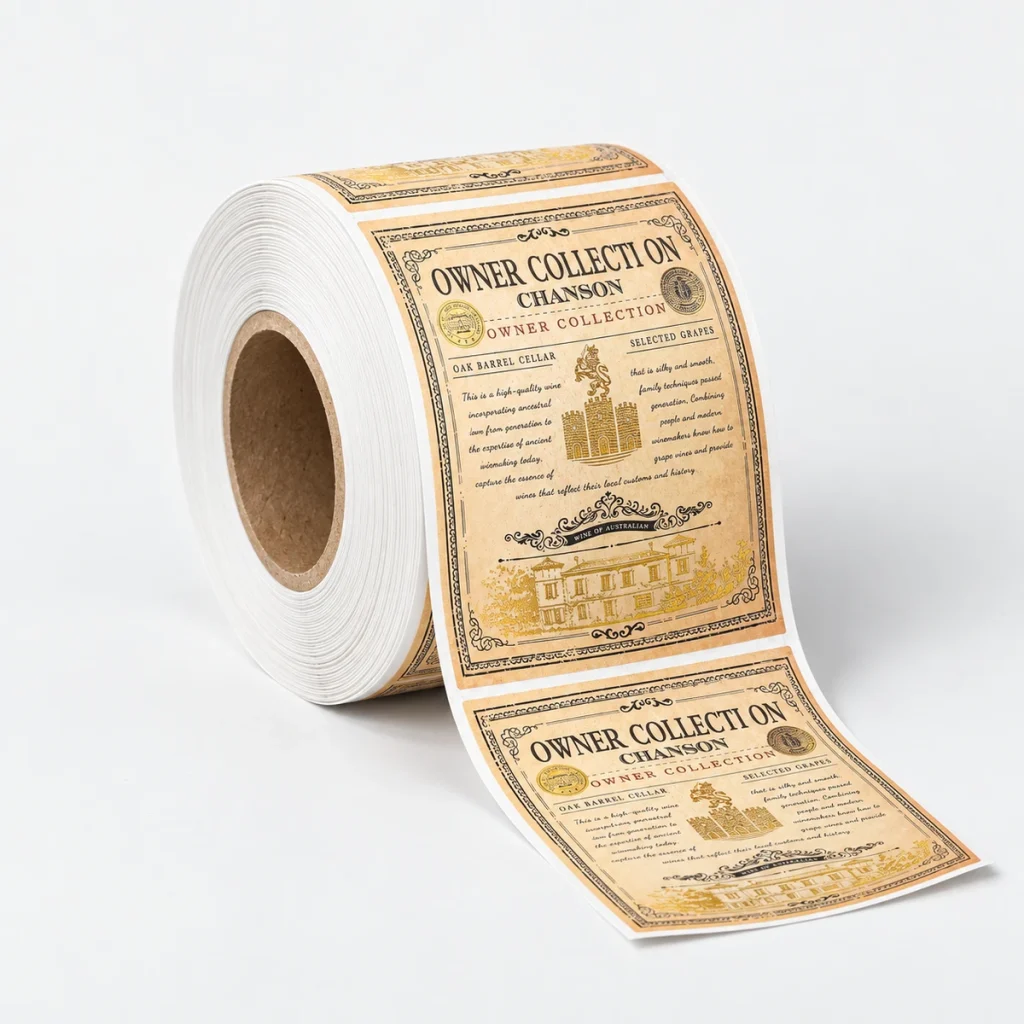
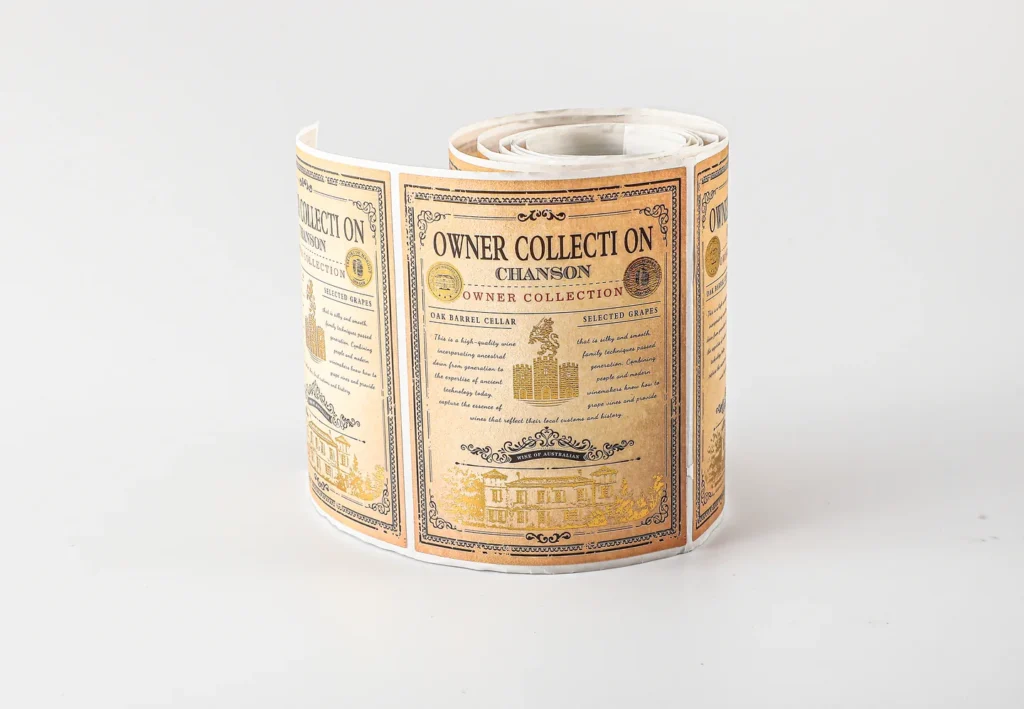
MEIKEI’s label MOQ is 100 individual labels. For machine or continuous-feed application, start with custom roll labels. For manual peeling from backing sheets, review custom sheet labels. Upload artwork and describe the adhesive requirement with your specification; supply format alone does not decide the adhesive.
Questions buyers ask about label adhesive
Will a removable label always leave no residue?
No universal promise follows from the name. Agree the surface, duration and exposure conditions, then evaluate the proposed construction. A short trial on a different container does not establish long-term removal performance.
Does a BOPP label automatically use permanent adhesive?
No. BOPP identifies the face film. Ask for the adhesive reference separately, along with the liner and printed finish.
Can one adhesive specification cover every product variant?
Only if the relevant surfaces and use conditions are covered by the approval. List any different container materials, coatings, sizes or exposure conditions so the supplier can identify what needs a separate review.
Published by MEIKEI Printing as general packaging planning guidance. Material suitability, product performance and production details must be confirmed for your actual specification. Linked technical references support the relevant points; illustrations are not test evidence.